How to Make Your Garden More Drought-Tolerant
Make your garden more drought-tolerant by building healthy soil, mulching deeply, choosing tough plants, and watering deep but less often.
Water is one of the most precious things your garden depends on, and honestly, in a lot of parts of the country right now it's getting harder to come by. But a drought-tolerant garden doesn't have to mean brown, sad, or bare. Done right, it's a thoughtfully put-together space that looks genuinely lovely while using a fraction of the water you'd normally burn through.
Build Soil That Holds Water
This is where I'd start every single time. Healthy soil packed with organic matter hangs onto moisture far longer than the tired, depleted stuff most of us are working with. Every inch of compost you work into a bed measurably increases how much water that soil can store, which means the difference between roots that stay damp for a week and roots that dry out in two days.
You don't have to dig it all in, either. A generous layer of compost spread on top will work its way down as worms and rain do their thing. Do this once or twice a year and your soil quietly gets better at surviving dry spells with each season.
Mulch Like You Mean It
If soil is the foundation, mulch is the insurance. A two-to-three-inch blanket of mulch over bare soil is one of the highest-return moves in the whole garden.
- It shades the soil so the sun can't bake the moisture out.
- It slows evaporation dramatically, cutting how often you need to water.
- It smothers thirsty weeds that would otherwise compete for every drop.
- As it breaks down, it feeds the soil right back.
Use whatever's local and cheap: shredded bark, wood chips, straw, even chopped leaves in fall. Just keep it pulled back an inch from plant stems so they don't stay soggy and rot.
Choose Plants That Want to Be There
You can fight your climate, or you can plant with it. Drought-tolerant and native plants have already solved the water problem for you, which is a huge head start.
Look for the Tough Traits
Plants adapted to dry conditions tend to share a few tells:
- Silver, gray, or fuzzy leaves that reflect sunlight and slow water loss.
- Deep taproots that reach moisture far below the surface.
- Succulent or waxy foliage that stores water inside the plant.
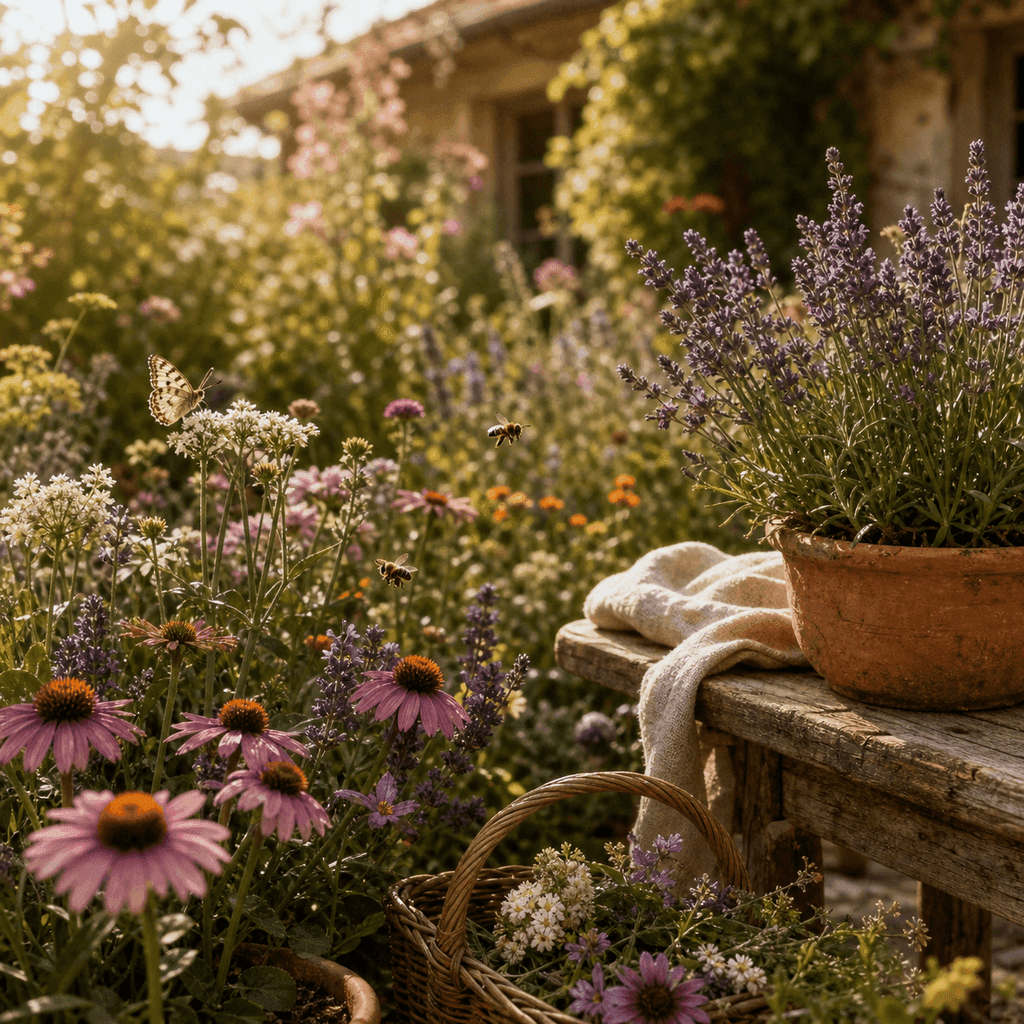
Lavender, yarrow, salvia, coneflower, sedum, and ornamental grasses are dependable, good-looking places to start. Better yet, ask a local native-plant nursery what thrives in your specific region, since natives are already dialed in to your rainfall.
The most water-wise plant in the world is the one that already grows wild down the road from you. It has spent thousands of years learning your climate.
Water Deep, Not Often
Once your garden is planted, how you water matters as much as how much. Frequent light sprinkling is the worst thing you can do, because it trains roots to stay shallow near the surface where they dry out fast and depend on you forever.
Instead, water deeply and less often. A long, slow soak drives moisture down and coaxes roots to follow it, building plants that can go days without you. Water early in the morning so less evaporates, and aim the water at the soil rather than the leaves. A soaker hose or simple drip line delivers it right to the roots with almost nothing wasted.
Let the Sky Help
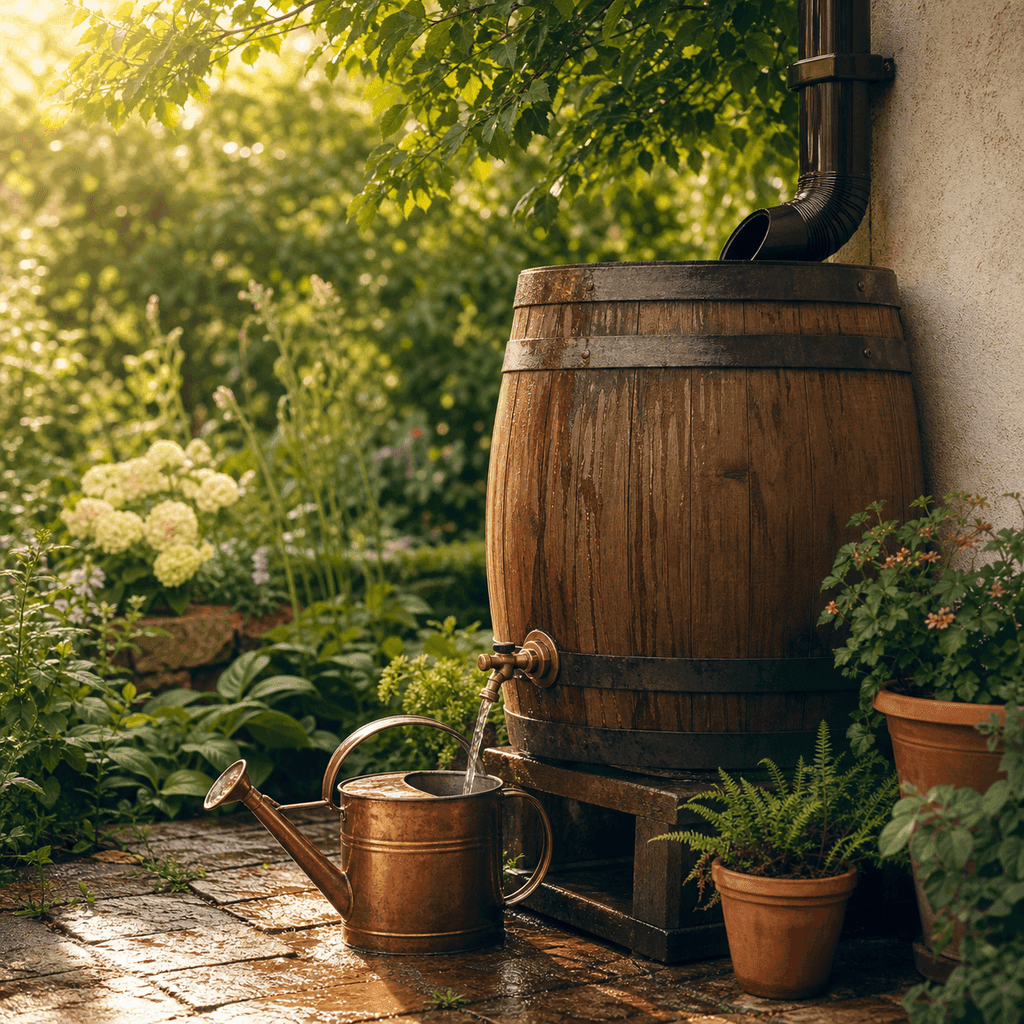
Finally, capture what falls for free. A rain barrel under a downspout stores roof runoff for the dry weeks ahead, and even a shallow depression or swale that catches and holds runoff lets water soak in instead of racing off to the storm drain.
Put it all together, healthy soil, deep mulch, well-chosen plants, and smart watering, and you end up with a garden that shrugs off a dry summer while your water bill drops. That's not a compromise. That's just a smarter garden.
James Carter
Composting & Soil Specialist
James is a lifelong allotment grower who's happiest with a fork in a compost heap. He covers composting, soil health, and closing the loop in the garden. More from James →