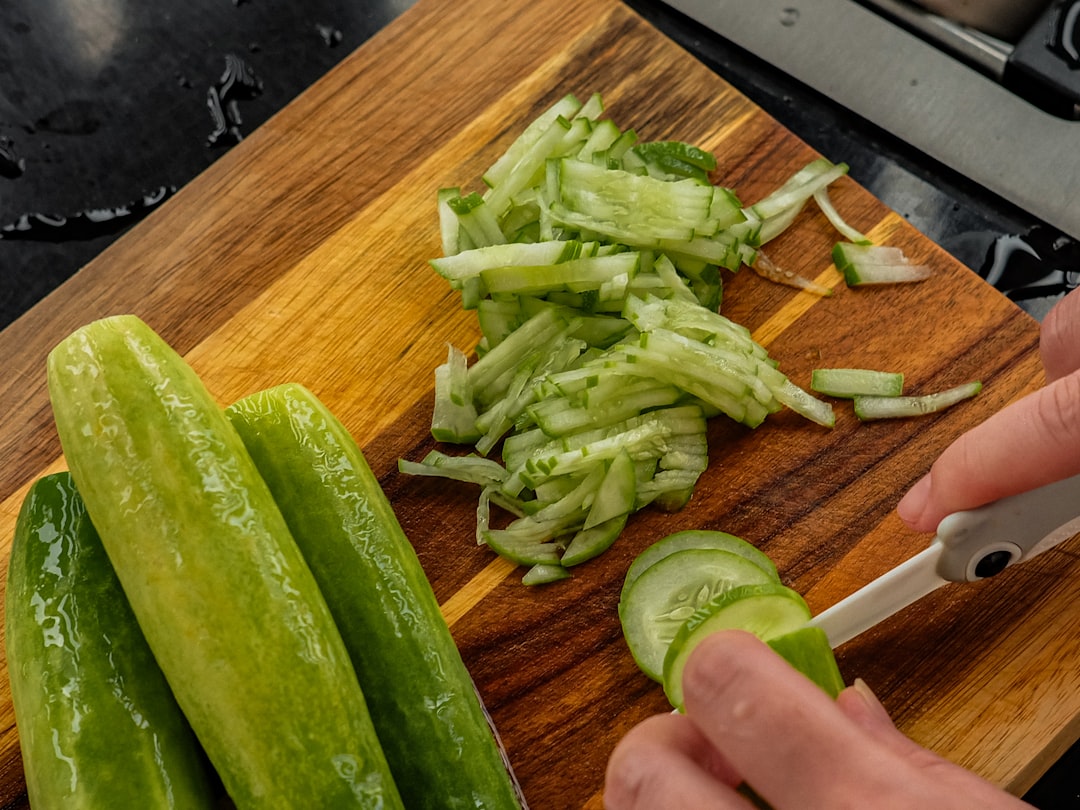
Here’s something I don’t think gets talked about enough: how you cut your vegetables is actually a sustainability issue. Bad technique means you’re trimming off more than you need to, generating extra scraps, and stretching your grocery budget thinner than it has to be. Getting comfortable with a knife pays you back every single time you cook.
The Claw Grip: Keep Your Fingers Safe
This is the one technique I wish someone had shown me years earlier. Curl your fingertips under so your knuckles stick out, and rest those knuckles flat against the blade. The knife glides against your knuckle as a guide instead of running anywhere near your fingertips. Even if your hand slips, you’re not going to slice yourself badly. It feels a little awkward the first few times — I remember thinking I’d never get used to it — but honestly, after a week of cooking it just becomes how you hold a vegetable.
How to Minimize Waste When Cutting
The number one way people waste vegetables without realizing it? Over-trimming. A knife takes off way more than you need to when peeling. For carrots, parsnips, potatoes — just grab a vegetable peeler. It takes the thinnest possible layer and leaves all that good stuff underneath intact. For soft herbs like chives or basil, skip the knife entirely and use kitchen scissors. You waste nothing, cleanup is faster, and the herbs don’t bruise the way they do under a blade.
The Rocking Motion for Herbs
Once you get this down, chopping herbs stops feeling like a chore. Pile everything into a loose mound on your board, anchor the tip of the knife, and rock the heel up and down in a slow arc across the pile. Then scrape it back together and go again. You’re not pressing hard or rushing — just letting the knife do the work. I tried this with a big handful of parsley last week and had it finely chopped in maybe 45 seconds. It’s one of those small things that makes cooking feel genuinely satisfying.
Julienne, Dice, and Chiffonade
These three cuts sound fancier than they are. Julienne is just cutting a vegetable into flat planks, stacking those planks, and slicing them into matchsticks. Dice takes it one step further — cut planks into strips, then cross-cut into little cubes. Chiffonade is my personal favorite for kale or basil: stack the leaves, roll them up tight like a little cigar, and slice across the roll into thin ribbons. Beyond looking nice, these cuts actually matter for how your food tastes — more surface area means more contact with oil, sauce, or seasoning, and everything cooks more evenly.
Use Every Part of the Vegetable
My husband used to just snap off the broccoli florets and toss the whole stem. I finally convinced him to try peeling and slicing the stem for stir-fries, and now he actually prefers it — it’s got a crunch the florets don’t have. Same idea with carrot tops, which work surprisingly well blended into pesto. Leek greens, celery leaves, herb stems — all of it has flavor. And whatever truly can’t go into a dish? Toss it in a zip-lock bag in the freezer. Once it’s full, simmer it into stock. A little organization and you’re basically wasting nothing.
Final Thoughts
None of this requires fancy equipment or culinary school. Just a decent knife, a little patience, and the willingness to slow down and be intentional about how you’re cutting. I’ve been cooking this way for a few years now and the difference in how much I actually use versus throw away is pretty noticeable. Start with the claw grip this week — just that one thing. Everything else builds naturally from there.
Check out our other eco-friendly guides.