Zero Waste Kitchen: 15 Swaps That Actually Make a Difference
Fifteen tested zero waste kitchen swaps that actually make a difference, from beeswax wraps to compost bins, replacing everyday single-use items for good.

My kitchen trash can used to fill up embarrassingly fast. Plastic wrap, zip-lock bags, paper towels, single-use this, disposable that. It genuinely shocked me once I started paying attention. The good news? Every one of those things has a swap that works in real life. Here are fifteen zero waste kitchen swaps that actually make a difference, all of which I've personally made, tested, and kept using.
The Everyday Wrapping and Storage Swaps
These first few tackle the disposables you reach for most, the ones that quietly dominate the trash.
1. Beeswax wraps instead of cling film. Cotton coated in beeswax that molds with the warmth of your hands to seal bowls, wrap cheese, and cover cut produce. My first swap, and still my favorite.
2. Silicone bags instead of zip-locks. Reusable, freezer-safe, dishwasher-safe bags that replace a steady stream of plastic ones.
3. Glass containers instead of plastic tubs. They don't stain, hold odors, or leach, and they move from fridge to microwave to oven.
4. Silicone stretch lids instead of plastic wrap. Stretch over bowls, cans, and jars for a genuinely airtight seal.
5. Cloth bowl covers for bread and salads. Elasticized fabric caps that breathe and toss in the wash.
The Paper and Disposable Swaps
Paper products are a huge, invisible source of kitchen waste. These swaps end the cycle of repurchasing.
6. Cloth napkins instead of paper. They look nicer, feel better, and last years.
7. "Unpaper" towels instead of paper towels. Cloth wipes for spills and counters, washed with your regular laundry.
8. Reusable dish cloths instead of sponges. Compostable cellulose or knit cloths that don't shed microplastics.
9. Recycled or bamboo paper for the jobs cloth can't do. Keep one roll for the genuinely gross messes.
You don't have to make all fifteen swaps this week. Pick the three disposables you buy most often, replace those first, and let the rest follow as things run out.
The Shopping and Sourcing Swaps
Waste starts before food ever reaches your kitchen, so these swaps target the store.
10. Reusable grocery bags. Keep a durable set in the car and a packable one in your bag so you never forget them.
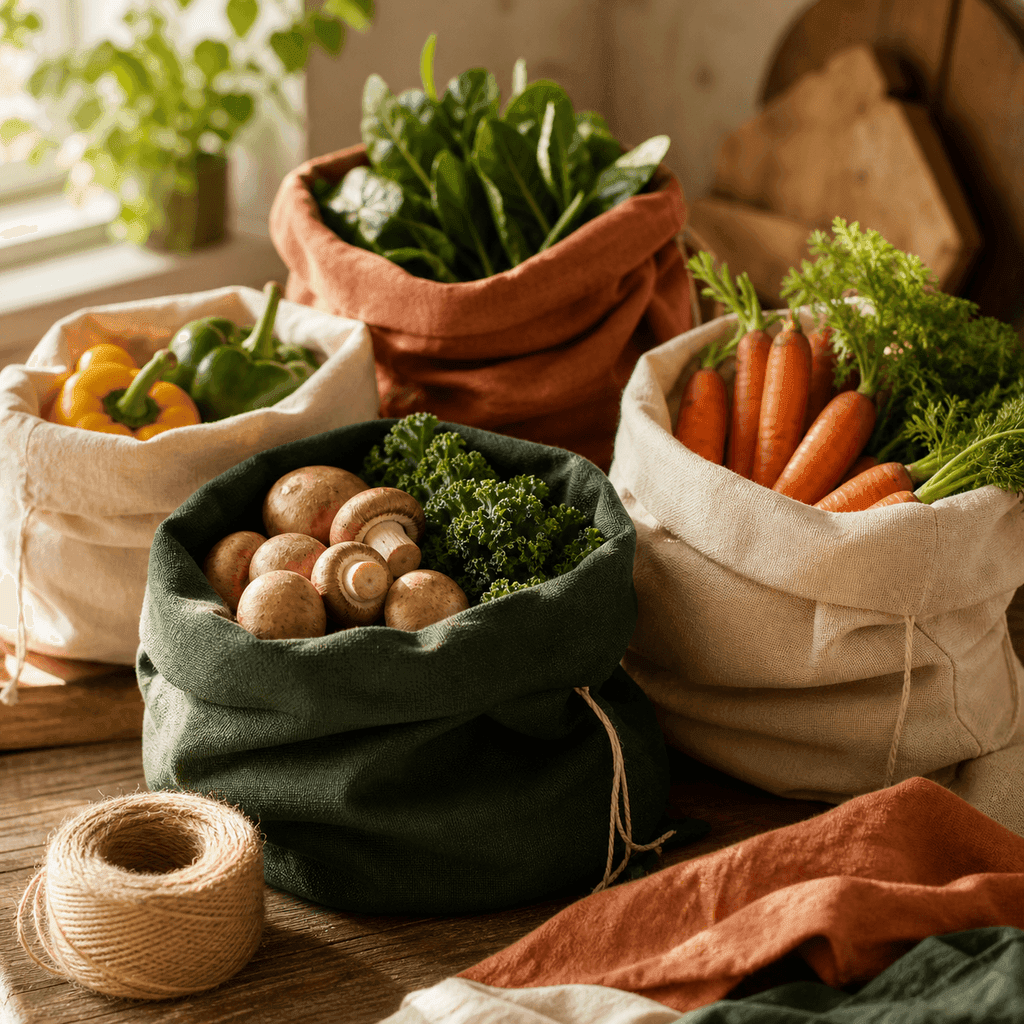
11. Reusable produce bags. Mesh or cloth bags replace the flimsy plastic ones in the produce aisle.
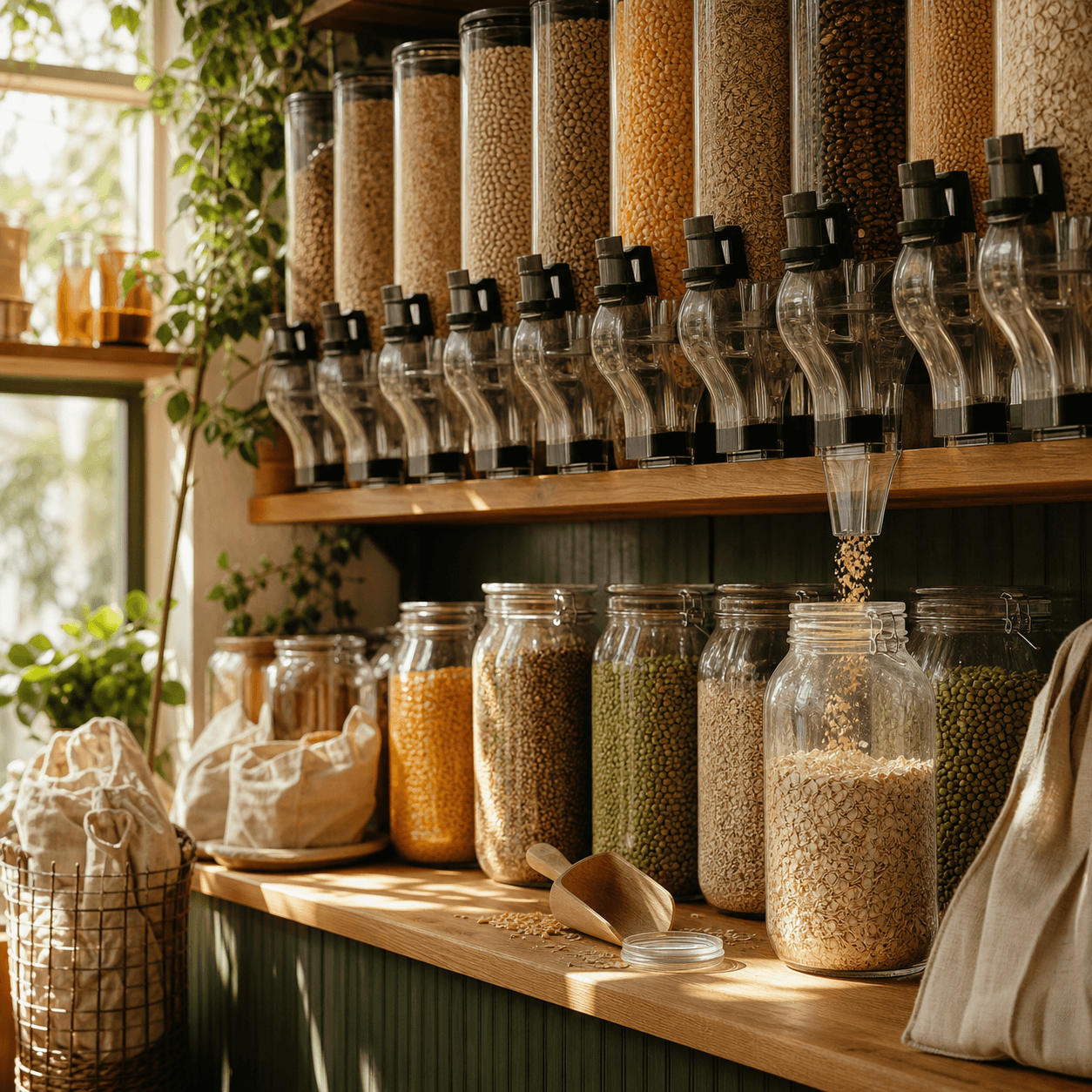
12. Bulk-bin shopping with your own jars. Buy exactly what you need with zero packaging, often for less per pound.
The Kitchen Habit Swaps
The last few aren't products so much as systems, and they punch above their weight.
13. A compost bin for scraps. Peels, coffee grounds, and eggshells become soil instead of landfill methane. A countertop caddy makes it effortless.
14. Homemade cleaners instead of bottled sprays. Vinegar, baking soda, and castile soap handle nearly everything and refill the same bottles forever.
15. A reusable coffee filter or French press. Skip disposable filters and pods; compost the grounds directly.
Which Swaps to Start With
If fifteen feels like a lot, it is, and you don't need to do them all at once. The highest-impact starters are the ones replacing something you buy constantly: paper towels, plastic wrap, and zip-lock bags. Swap those three and you'll see a real dent in your trash within a week.
The rest layer in naturally as disposables run out. That's the quiet beauty of a zero waste kitchen. These swaps that actually make a difference aren't a dramatic overhaul; they're small, permanent upgrades that keep paying off every single day, long after the novelty wears off.
Sarah Mitchell
Founder & Editor
Writer, home cook, and slightly obsessive gardener sharing small, doable ways to live a little lighter. Sarah started Earth Friendly Blogs at her own kitchen table. More from Sarah →