The Best Eco-Friendly Cookware Materials, Ranked
A ranked guide to eco-friendly cookware materials, from cast iron to ceramic, weighing durability, safety, and sustainability to help you cook cleaner.
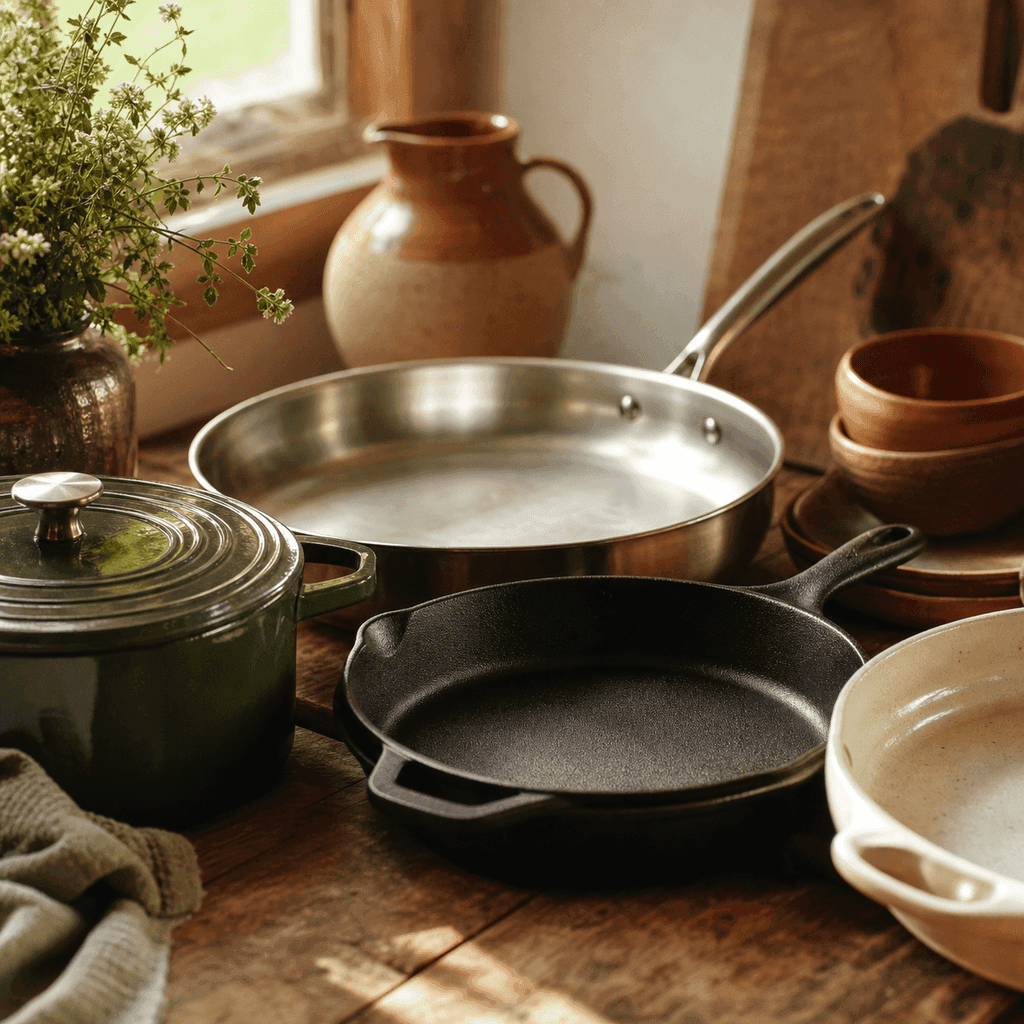
When my grandmother handed down her cast iron skillet, it was already older than my parents, and it still sears a steak better than anything I could buy today. That's the whole story of eco-friendly cookware in one pan: the greenest cookware is usually the kind you never have to replace. So instead of chasing whatever's trending, let's rank the best eco-friendly cookware materials by what actually matters, durability, safety, and how they're made and disposed of.
Here's how the main players stack up, from the ones worth building a kitchen around to the one worth phasing out.
What Makes Cookware "Eco-Friendly"
Before the ranking, it helps to define the terms, because "eco-friendly" gets slapped on a lot of marketing. Three factors do most of the work:
- Longevity: a pan that lasts decades beats a "green" pan you replace every two years
- Materials and coatings: natural, inert surfaces avoid chemicals that can degrade or leach
- End of life: metals like iron and steel are endlessly recyclable; coated pans often aren't
With those in mind, the ranking becomes pretty clear.
1. Cast Iron: The Forever Pan
Cast iron tops the list for a simple reason: it lasts essentially forever and gets better with age. A well-seasoned skillet develops a natural, slick cooking surface with no synthetic coating at all. It's made from one of the most abundant metals on earth, it's fully recyclable, and a rusty thrift-store find can be restored to like-new with steel wool and oil.
The trade-offs are honest ones. It's heavy, it needs occasional re-seasoning, and it's not ideal for long-simmered acidic dishes like tomato sauce, which can strip the seasoning. Enameled cast iron solves the acid issue with a glass-based coating, at a higher price. For everyday searing, baking, and frying, nothing matches its lifespan-per-dollar.
2. Stainless Steel: The Reliable All-Rounder
Stainless steel is the workhorse professional kitchens rely on, and it's a close second for sustainability. It's non-reactive, so it handles acidic foods without issue, it doesn't leach meaningfully into food, and quality pieces last for decades. At end of life it's one of the most recycled materials in the world.
Look for tri-ply or fully-clad construction, where a layer of aluminum or copper is sandwiched between steel for even heating. It isn't nonstick, which is the main learning curve, but proper preheating and enough fat prevent most sticking.
3. Ceramic-Coated: The Nonstick Compromise
If you genuinely need nonstick for eggs or delicate fish, ceramic-coated pans are the most eco-conscious option in that category. The coating is typically a silica-based (sand-derived) sol-gel that's free of PTFE and PFOA, and it delivers a slick surface without those chemistries.
The honest caveat is durability. Ceramic coatings wear out faster than bare metal, often losing their nonstick quality within a few years, at which point the whole pan usually gets tossed. Treat it as a specialized tool rather than your only pan: use low-to-medium heat, wood or silicone utensils, and hand washing to stretch its life as far as possible.
The most sustainable pan in any kitchen is the one already hanging on your rack, cared for well enough that you never shop for a replacement.
4. Carbon Steel: The Lightweight Cousin
Carbon steel deserves a spot for anyone who loves cast iron's chemistry but wants less weight. It seasons the same way, builds a natural nonstick patina, heats quickly and responsively, and lasts a lifetime. It's the metal behind classic woks and restaurant sauté pans.
It shares cast iron's needs, seasoning, hand washing, and care around acidic foods, which is why it lands just below the top two rather than above them. But for stir-fries, omelets, and high-heat cooking, it's a superb, long-lived choice.
Where Nonstick (PTFE) Lands, and What to Do
Conventional PTFE nonstick, the classic slick black pan, ranks at the bottom. These pans have a short useful life, the coating can scratch and degrade, and they're difficult to recycle, so they head to the landfill in a few years. Modern versions have phased out PFOA, but the core issues of short lifespan and non-recyclability remain.
If you already own one, you don't need to panic-toss it; use it gently on low heat and replace it, when the time comes, with cast iron, stainless, or ceramic. Building a kitchen around a couple of pans you'll keep for life is the real sustainability win, far more than swapping one disposable pan for another.
Ranking cookware this way keeps the focus where it belongs: not on the label, but on the pan that'll still be cooking dinner decades from now.
Frequently Asked Questions
What is the most eco-friendly type of cookware?
Cast iron and stainless steel top the list because they last for generations, use no chemical coatings, and are fully recyclable at the end of their life. The greenest pan is almost always the one you never have to replace, so durability matters more than any green label. Ceramic-coated and carbon steel follow, with conventional PTFE nonstick ranking lowest.
Is ceramic-coated cookware safer than Teflon?
Ceramic coatings are typically a silica-based sol-gel that is free of PTFE and PFOA, so they deliver a nonstick surface without those chemistries. The trade-off is durability, since ceramic coatings tend to lose their nonstick quality within a few years and usually get tossed at that point. Treat a ceramic pan as a specialized tool for eggs and delicate fish rather than your only pan.
How do you keep food from sticking to a stainless steel pan?
Use the water test: heat the empty pan on medium for a couple of minutes, then flick in a few drops of water. If they bead up and skate across the surface like mercury, the pan is ready, so add your oil, let it shimmer, then add the food. Proper preheating creates a natural release layer that makes stainless far less frustrating than its reputation.
Should I throw out my old nonstick pans right away?
There is no need to panic-toss them. Use an existing PTFE pan gently on low heat, avoid scratching the coating, and when it eventually wears out replace it with cast iron, stainless, or ceramic. Building a kitchen around a couple of long-lasting pans is a bigger sustainability win than repeatedly swapping disposable ones.
What is the difference between cast iron and carbon steel?
Both season the same way, build a natural nonstick patina, and last a lifetime, but carbon steel is lighter and heats more quickly and responsively. Carbon steel is the metal behind classic woks and restaurant saute pans, while cast iron holds heat longer for searing and baking. Both need seasoning, hand washing, and care around acidic foods.
Olivia Reed
Sustainable Kitchen Writer
Olivia writes about low-waste cooking, plastic-free storage, and getting the most out of every ingredient. She tests every swap in her own small-city kitchen. More from Olivia →