How to Freeze Food Without Plastic Bags
Freeze food without plastic bags using glass jars, stainless containers, and simple wrapping tricks that prevent freezer burn and cut kitchen waste.
For years I assumed the freezer was plastic's last stronghold, that you simply couldn't stash soup or berries without a zip-top bag. Then I cracked a mason jar of chili by filling it too full, learned my lesson, and never looked back. Freezing food without plastic bags is completely doable once you know a couple of rules that keep glass from breaking and food from drying out.
Here's how to do it well, with the containers you likely already have and a few small habits that make all the difference.
Why Skip the Plastic Bags
Plastic freezer bags are used once, rarely recyclable, and they can shed microplastics into food, especially fatty or acidic items over long storage. Reusable alternatives cut that waste entirely and, frankly, organize your freezer better since rigid containers stack neatly instead of flopping into frozen bricks.
The switch also saves money over time. A set of glass jars or stainless tins lasts for years, while boxes of disposable bags are a recurring purchase you can cross off the list for good.
Glass Jars: The Workhorse (With One Big Rule)
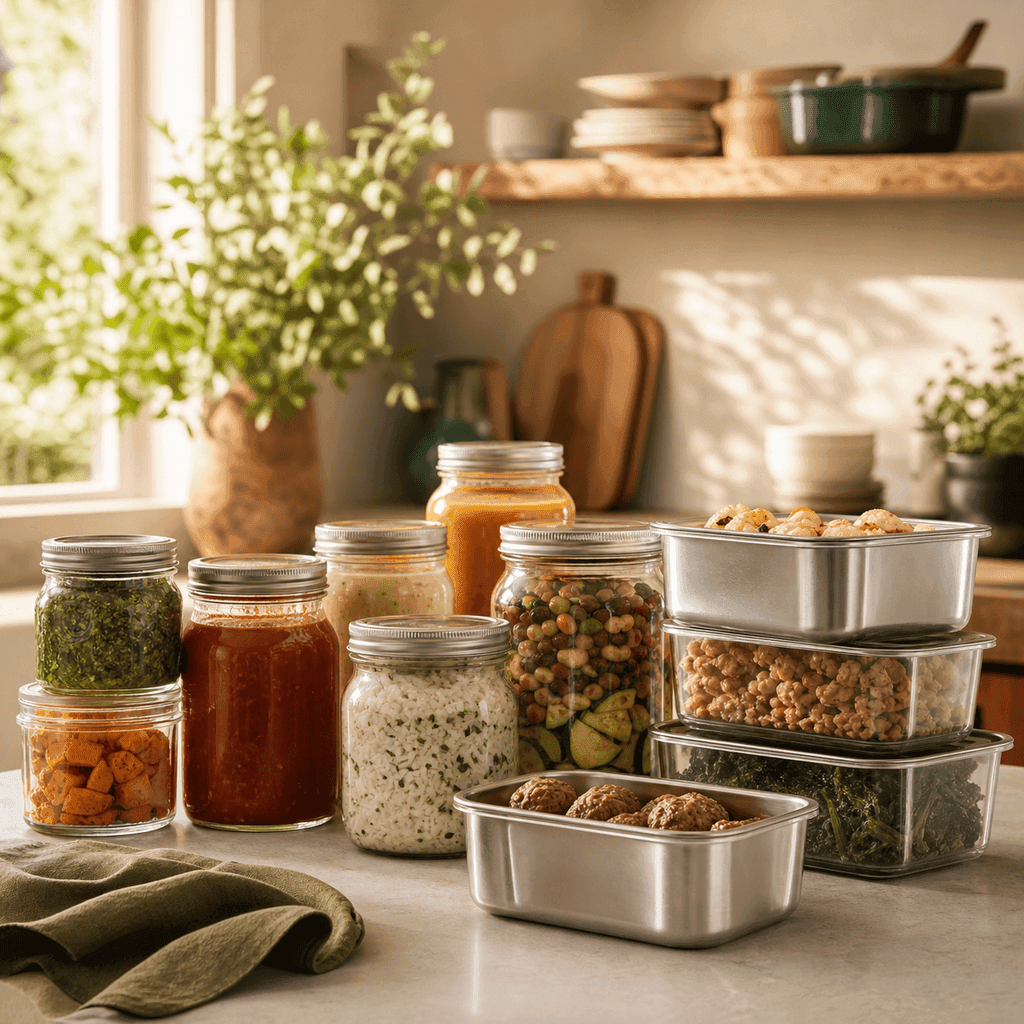
Wide-mouth glass jars are the freezer MVP for soups, stocks, sauces, and leftovers. The catch is that liquid expands as it freezes, and a jar filled to the brim will crack. Respect the expansion and glass performs beautifully.
- Leave headspace. Fill to about an inch below the shoulder, more for very liquid foods, giving the contents room to expand.
- Use straight-sided jars for liquids. Jars that curve inward at the shoulder trap expanding ice and crack; straight or slightly tapered jars release upward instead.
- Freeze unlidded first. Let the contents freeze solid before screwing the lid on, so the expansion happens without pressure.
- Cool before freezing. Never put a hot jar into the freezer; let food reach room temperature or chill in the fridge first.
Follow those and jar breakage basically disappears. I keep a shelf of pint and quart mason jars just for this, and they cycle from freezer to counter to dishwasher endlessly.
Stainless Steel and Silicone for Everything Else
Not everything wants a jar. Stainless steel containers with tight lids are excellent for casseroles, cooked grains, and anything you'll reheat, and they're practically indestructible. Because they're opaque, labeling matters even more here.
Reusable silicone bags fill the exact niche the old plastic ones did: they lie flat, mold around awkward shapes, and let you press out air. They're ideal for berries, chopped vegetables, marinating portions, and flat-frozen sauces. Look for sturdy, well-sealing ones, and dry them thoroughly between uses so they don't trap moisture.
The best freezer container is one you'll actually reuse for years, not one you'll toss after a single batch of soup.
Beat Freezer Burn Without a Zip-Top
Freezer burn is just dehydration and oxidation where air touches food, and you can prevent it without plastic bags. The goal is minimizing air contact and keeping temperatures steady.
A few reliable tactics:
- Freeze flat, then stack. Portion into flat parcels so items freeze fast and take up less room.
- Pack tightly. Fill containers to reduce air pockets; a folded piece of parchment pressed onto the surface of stews limits air contact.
- Wrap dense foods. Beeswax wraps or unbleached parchment tied with string protect bread, cheese, and portions of meat, tucked inside a container for a second layer.
- Keep the freezer cold and full. A fuller freezer holds temperature better, and a stable zero-degrees-Fahrenheit setting preserves quality longest.
For berries and small items, freeze them spread on a parchment-lined tray first, then transfer the loose frozen pieces into a jar. This "flash freezing" keeps them from clumping into one solid mass.
A Simple Freezing Routine
Put it together and a plastic-free freezing session flows easily. Cook or prep your food and let it cool. Portion into the right container: jars for liquids, stainless for reheatable meals, silicone or parchment for flat and awkward items. Leave headspace, remove air, and label with contents and date. Freeze jars unlidded until solid, then cap them.
When you're ready to eat, thaw in the fridge overnight or set a jar in a bowl of cool water. Because everything is portioned, you defrost only what you need and waste nothing.
Ditching plastic freezer bags turns out to be one of the easier kitchen swaps, not one of the hardest. Mind the headspace on your jars, keep a marker handy for labels, and your freezer becomes a tidy, plastic-free extension of your pantry, no zip-top in sight.
Olivia Reed
Sustainable Kitchen Writer
Olivia writes about low-waste cooking, plastic-free storage, and getting the most out of every ingredient. She tests every swap in her own small-city kitchen. More from Olivia →