Natural Ways to Keep Your Kitchen Smelling Fresh Without Chemicals
Discover natural ways to keep your kitchen smelling fresh without chemicals, from simmer pots and citrus to baking soda and better everyday habits.
Synthetic air fresheners are kind of strange when you stop to think about it. We're spraying petroleum-derived chemicals into the air we breathe, just to cover up other smells, and a lot of them irritate airways in the process. The natural alternatives are often cheaper, safer, and honestly just better. Here are the natural ways to keep your kitchen smelling fresh without chemicals that I actually use.
The Simmer Pot Method
I tried this for the first time a few winters ago and haven't gone back. You fill a small pot with water, toss in whatever sounds good, and let it barely simmer on the lowest heat. The steam carries the scent through the whole kitchen and often the rest of the house.
Some combinations to try:
- Citrus and spice: orange or lemon peels, cinnamon sticks, and cloves
- Cozy and warm: apple peels, star anise, and a splash of vanilla extract
- Herbal and bright: rosemary sprigs, lemon slices, and a little fresh thyme
Keep an eye on the water level so it doesn't boil dry, and top it up as it steams. You can even reuse the same pot of ingredients for a day or two before composting them.
A simmer pot isn't really an air freshener, it's actually adding a good smell to your kitchen instead of masking a bad one with something worse. That's the whole difference between covering up and genuinely freshening.
Absorb Odors With Baking Soda
Baking soda is the quiet workhorse of a naturally fresh kitchen because it neutralizes odors rather than covering them.
- Keep an open box or small dish in the fridge and swap it every month or two
- Set a small bowl on the counter to pull stale smells from the air
- Sprinkle it into the trash can and compost bin between washes
- Pour some down the sink, chase it with hot water, and it helps freshen the drain
Neutralize With Vinegar and Citrus
White vinegar is fantastic at cutting through lingering food smells. Its odor disappears as it dries, taking other odors with it.
For the Air
Set out a small bowl of white vinegar for a few hours to absorb strong smells after cooking fish or frying. It works surprisingly well and vanishes without a trace.
For Surfaces
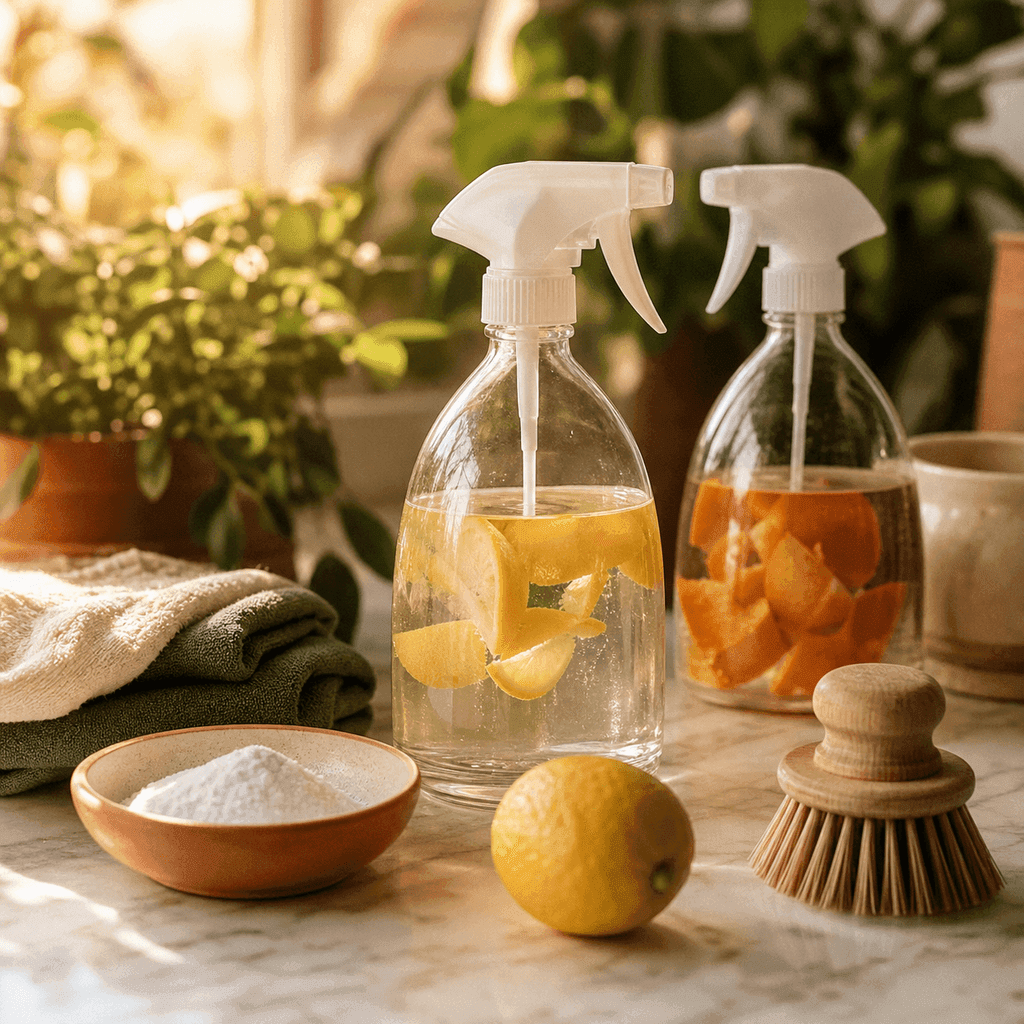
A simple mix of equal parts vinegar and water wipes down counters and cutting boards, lifting food residue that turns funky over time. Add a strip of citrus peel to the bottle to soften the smell.
For the Disposal
Grind a few lemon or orange peels through the garbage disposal to freshen it naturally. The oils in the peel leave a clean citrus scent behind.
Fix the Source, Not Just the Smell
The most effective natural approach is stopping odors before they start:
- Empty compost and trash often, ideally daily for food scraps, so nothing sits and sours
- Keep the drain clear with a weekly baking soda and hot water flush
- Clean the fridge regularly and toss anything past its prime before it becomes a science experiment
- Take out damp towels and wet sponges so mustiness never sets in
- Wipe up spills right away, especially in the fridge and around the stove
A Fresher Kitchen, Naturally
You really don't need a single aerosol can to keep your kitchen smelling wonderful. A simmer pot for warmth, baking soda to absorb, vinegar and citrus to neutralize, and a few good habits to stop odors at the source will do it. Everything on this list is cheap, safe to breathe, and probably already in your pantry, which is exactly how keeping a fresh kitchen should feel.
Olivia Reed
Sustainable Kitchen Writer
Olivia writes about low-waste cooking, plastic-free storage, and getting the most out of every ingredient. She tests every swap in her own small-city kitchen. More from Olivia →