Eco-Friendly Sponge Alternatives That Actually Work Better
The best eco-friendly sponge alternatives that outperform plastic sponges, from natural loofah and cellulose to Swedish dishcloths and wooden brushes.
That standard yellow sponge sitting by your sink? It's made from polyurethane foam, which is basically petroleum-based plastic. It's one of the most bacteria-laden surfaces in the average kitchen, it sheds microplastics into your dishwater, it can't be recycled, and it ends up in a landfill. The good news is it's also completely unnecessary, because there are eco-friendly sponge alternatives that genuinely work better.
Natural Loofah Sponges
Most people assume loofah comes from the ocean. I did too, for an embarrassingly long time. It's actually the fibrous skeleton of a gourd, grown on a vine and dried out, which makes it a surprisingly great kitchen scrubber.
- Naturally tough on dried-on food and grimy stovetops
- Plastic-free and fully compostable at the end of its life
- Softens with warm water, firms up as it dries
- Rinses clean and air-dries fast, so it doesn't turn into a bacteria motel
When it finally wears out, snip it up and toss it in the compost. Try doing that with a plastic sponge.
Cellulose Sponges
If you love the familiar feel of a soft sponge, plant-based cellulose is the closest swap. Made from wood pulp, these look and behave much like a conventional sponge but are compostable and free of plastic foam.
Many come with a natural scrubbing layer (often loofah or coconut fiber) bonded on top, giving you both a soft side and a scouring side, just like the original, minus the petroleum.
The best eco swap is the one you'll actually stick with. If a plastic-looking sponge is what your hands expect at the sink, a cellulose sponge gives you that exact feel while quietly solving the plastic and microplastic problem.
Swedish Dishcloths
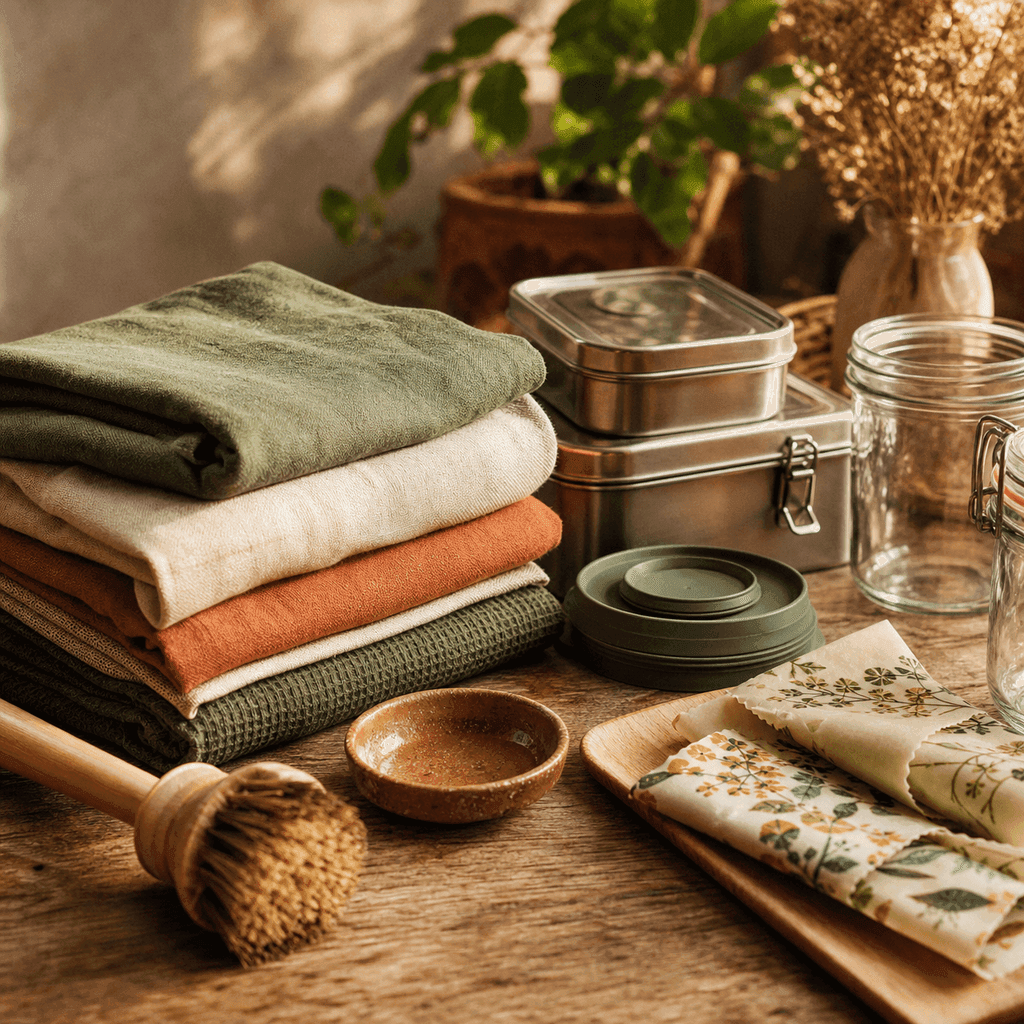
These are the sleeper hit of the plastic-free kitchen. A Swedish dishcloth is a flat cloth of cellulose and cotton that's absorbent like a sponge but dries flat and fast, so bacteria never get a foothold.
Why They Work So Well
- One cloth absorbs a remarkable amount, replacing rolls of paper towels
- They dry crisp and odor-free between uses
- They're machine washable and reusable for months
- When worn out, they're compostable
I keep a stack of these and rotate a fresh one in every day or two. They handle counters, spills, and dishes, and they never develop that sour sponge smell.
Wooden Dish Brushes
For scrubbing power and hygiene, it's hard to beat a wooden brush with natural plant-fiber bristles. Because the head stays up off the wet counter and dries quickly, it harbors far less bacteria than a damp sponge.
- Great for pots, pans, and produce
- Replaceable heads on many models, so the handle lasts for years
- Fully compostable or biodegradable when the fibers wear down
- Keeps your hands out of hot, greasy water
How to Choose
There's no single winner, just the right tool for how you clean:
- For heavy scrubbing: natural loofah or a wooden brush
- For a familiar soft sponge feel: cellulose
- For wiping, spills, and cutting paper towel use: Swedish dishcloths
- For pots and produce without wet hands: a wooden dish brush
Honestly, a small mix is ideal. I keep a loofah, a brush, and a couple of Swedish cloths in rotation, and I haven't bought a plastic sponge in years. They cost about the same over time, work at least as well, and every one of them can go in the compost instead of the trash. That's a swap with no real downside.
Sarah Mitchell
Founder & Editor
Writer, home cook, and slightly obsessive gardener sharing small, doable ways to live a little lighter. Sarah started Earth Friendly Blogs at her own kitchen table. More from Sarah →