How to Recycle Batteries Safely at Home
Learn how to store, tape, and drop off used batteries safely, prevent fires, and keep hazardous metals out of the landfill with this simple guide.
Dead batteries have a way of piling up in a kitchen drawer until you're not sure what to do with the little heap of them. It's tempting to just toss them in the trash, but that handful of spent cells is more hazardous, and more valuable, than it looks.
Batteries contain heavy metals and reactive chemistry that don't belong in a landfill, and some can spark fires when handled carelessly. Recycling batteries safely at home comes down to a few simple habits: store them right, protect the terminals, and drop them at the correct location.
Why Batteries Can't Go in the Trash
Every battery holds metals and compounds you'd rather not have leaching into soil and groundwater: lithium, cadmium, lead, mercury, and more, depending on the type. When batteries are landfilled, those materials can escape over time. Recycling recovers them instead, so they can be used again rather than mined anew.
There's a more urgent reason, too. Lithium batteries, the kind in phones, laptops, and many rechargeables, can short-circuit, overheat, and ignite if they're crushed or if their terminals touch metal. Tossed in with the trash or curbside recycling, they've caused serious fires in garbage trucks and sorting facilities across the country.
A single mishandled lithium battery can start a fire that shuts down an entire recycling plant. Taping the terminals takes two seconds and prevents exactly that.
Know Your Battery Types
Different batteries have different rules, so it helps to recognize what you're holding. The label almost always states the chemistry.
- Single-use alkaline (AA, AAA, C, D, 9-volt): the common household batteries. Modern ones are far less toxic than decades past.
- Lithium and lithium-ion: in electronics, power tools, and rechargeable packs. The highest fire risk and always worth recycling.
- Rechargeable NiMH and NiCd: in older cordless devices; contain metals that require recycling.
- Button and coin cells: in watches, hearing aids, and key fobs; small but can contain mercury or lithium.
- Lead-acid: car and marine batteries; heavy, highly recyclable, and handled separately.
Rechargeable, lithium, button, and lead-acid batteries should always be recycled. Even alkaline batteries are best recycled where programs exist.
Store and Tape Them Safely
The window between "dead" and "dropped off" is where accidents happen, so a little care at home matters. Set up a simple collection routine.
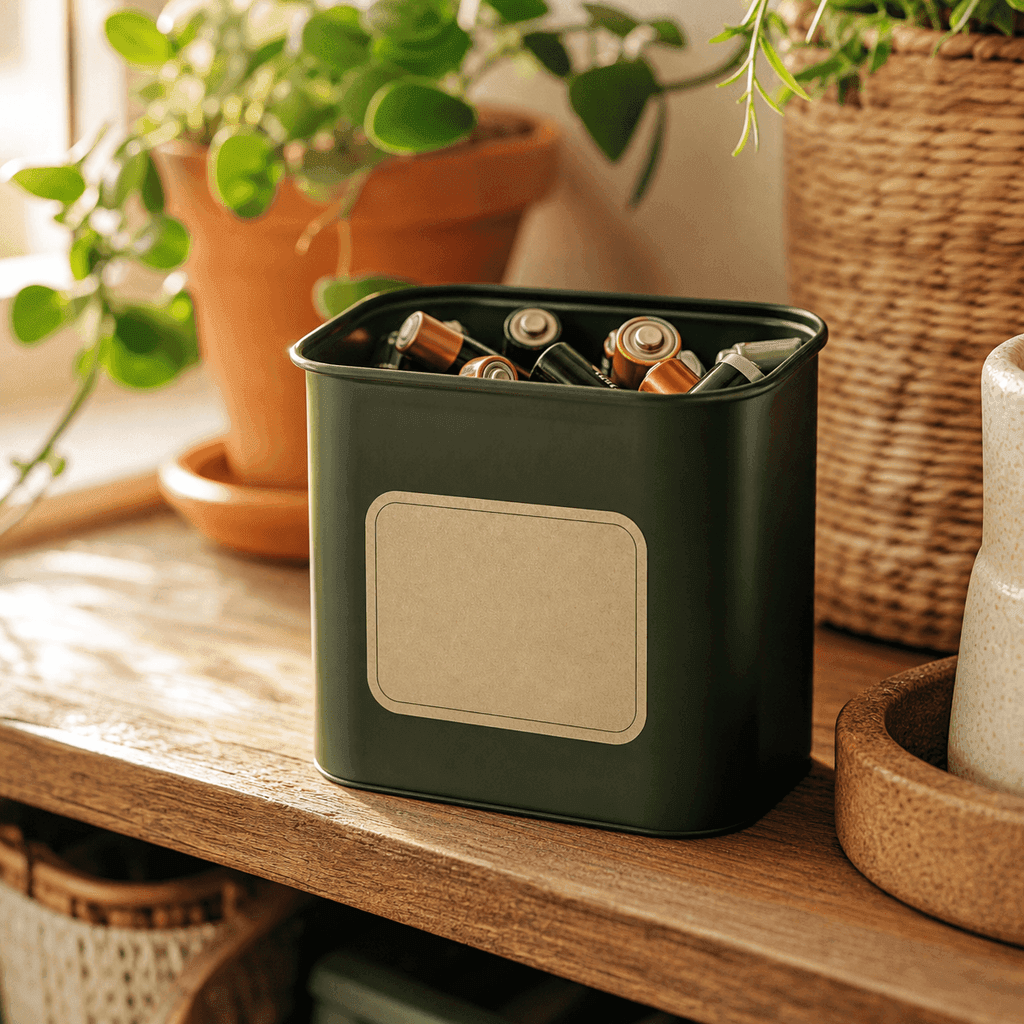
- Keep a dedicated container in a cool, dry spot, a plastic or cardboard box works well. Avoid metal containers, which can conduct a short.
- Tape the terminals of any lithium, 9-volt, button, or damaged battery. Put a piece of clear or electrical tape over the contacts so they can't touch other batteries or metal.
- Store loosely, not in a heap of bare terminals pressing together.
- Set aside any swollen, leaking, or damaged battery in a separate bag; these need prompt, careful disposal.
- Keep the container out of reach of children and pets, since button cells especially are dangerous if swallowed.
Where to Drop Them Off
Once you've collected a batch, finding a recycling location is usually easy and free. Options include:
- Home improvement and hardware stores, many of which have battery and rechargeable drop-off bins near the entrance.
- Electronics and office-supply retailers that accept rechargeable batteries and old devices.
- Libraries and municipal buildings, which often host collection boxes.
- Household hazardous waste facilities and collection events run by your city or county.
- Auto parts stores for car and other lead-acid batteries, sometimes with a core credit.
Search "battery recycling near me" or check your local government's waste website to find the nearest spot. Many national drop-off programs also have online locators where you enter your zip code.
Handling Damaged or Swollen Batteries
A battery that's puffy, leaking, hot, or physically damaged needs special care, because it's the most likely to catch fire. Don't toss it in your regular collection box. Place it in a nonflammable container, some people use a small amount of sand or a fireproof bag, keep it away from heat and other batteries, and take it promptly to a hazardous waste facility. If a lithium battery is actively smoking or hot, treat it as an emergency rather than a recycling task.
A Two-Minute Habit Worth Building
Recycling batteries safely isn't complicated once you have a system: a dedicated box, a roll of tape for the risky ones, and a drop-off spot you visit when it fills up. That small routine keeps toxic metals out of the ground, valuable materials in circulation, and, most importantly, fires out of trucks and recycling plants. Clear out that drawer with confidence.
Emily Bennett
Zero-Waste Home Writer
Emily focuses on the low-waste home — refills, natural cleaning, and calm, clutter-free swaps that actually stick. She believes greener living should feel good. More from Emily →