How to Collect and Use Rainwater in Your Garden
Learn how to collect rainwater with a barrel system and use it to water your garden, saving money and conserving a valuable resource.
There is something deeply sensible about letting the sky water your garden. Every inch of rain that falls on an average roof sends hundreds of gallons rushing down the gutters, and most of it simply disappears into the storm drain. Capturing even a fraction of that water is one of the easiest, most rewarding upgrades you can make as a gardener.
Learning how to collect and use rainwater in your garden lowers your water bill, eases pressure on municipal supplies, and gives your plants exactly what they prefer. Rainwater is naturally soft and free of the chlorine and added minerals found in tap water, which is part of why gardens often seem to perk up after a good storm.
Why Harvest Rainwater at All
The numbers make a compelling case. A single inch of rain on a 1,000-square-foot roof yields roughly 600 gallons of runoff. Catch even a slice of that and you have a free reservoir waiting for the next dry stretch.
The benefits stack up quickly:
- Lower bills: Outdoor watering can account for a large share of summer water use, and rainwater is free.
- Healthier plants: Soft, chlorine-free rainwater is gentler on soil life and foliage than treated tap water.
- Drought resilience: Stored water keeps your garden going when watering restrictions kick in.
- Reduced runoff: Capturing roof water eases the load on storm systems and helps prevent local flooding.
Setting Up a Rain Barrel System
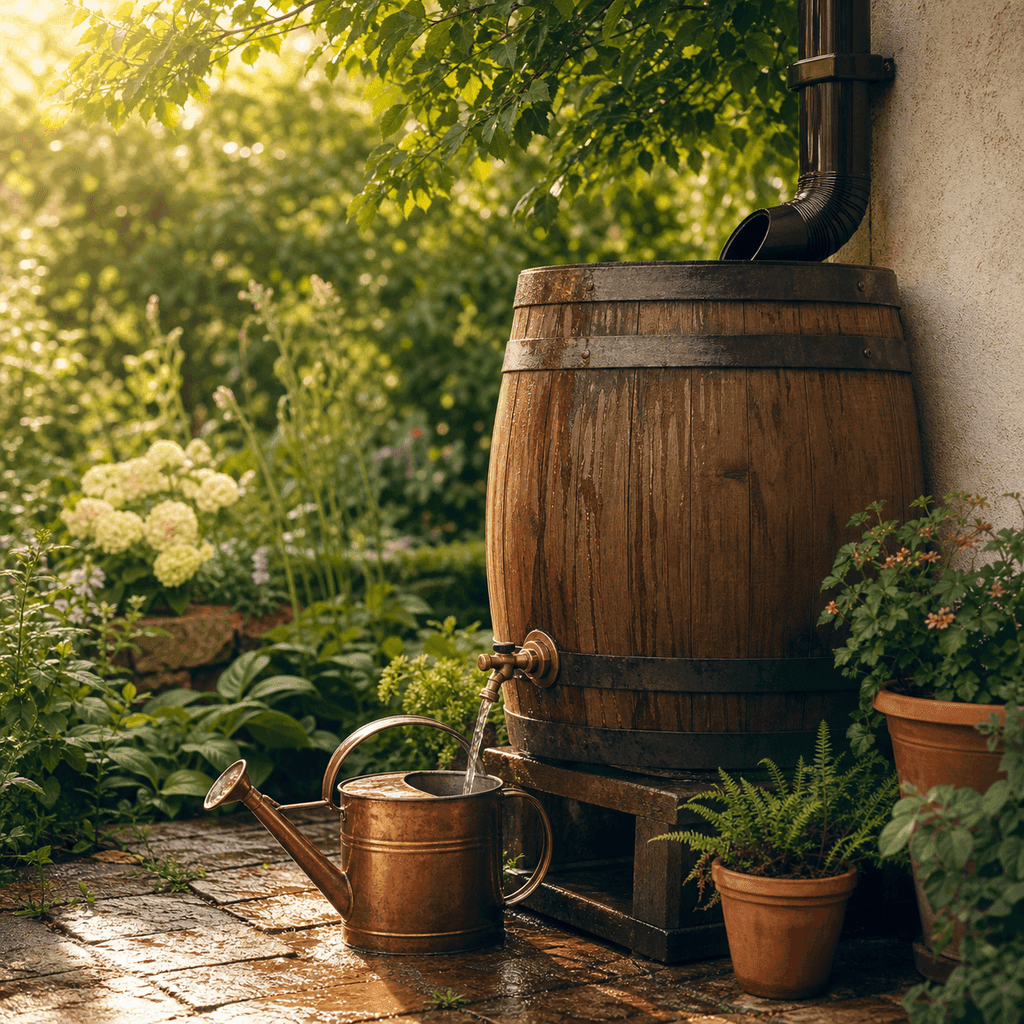
The most common starting point is a simple rain barrel connected to a downspout. You can buy a ready-made kit or build one from a food-grade barrel. Either way, a good setup includes a few key features.
- A screened inlet at the top to keep out leaves, debris, and mosquitoes.
- A spigot near the bottom for filling watering cans, with room underneath to fit one.
- An overflow outlet to direct excess water safely away from your foundation once the barrel is full.
- A stable, elevated base like concrete blocks, which raises the barrel and uses gravity to improve water pressure.
To install, position the barrel beneath a downspout, mark and cut the downspout to divert water in, and secure the connection. Many gardeners link two or more barrels in series so that when the first fills, water flows into the next, multiplying storage.
A single rainstorm can fill a 50-gallon barrel in minutes. The trick is not catching the water, which is easy, but having enough capacity to make the most of it.
Keeping Your Collected Water Clean
Stored rainwater stays healthiest with a little upkeep. Keep the inlet screen intact to block debris and prevent mosquitoes from breeding, and empty the barrel between rains so water doesn't sit stagnant for weeks. A tight-fitting lid keeps out light, which discourages algae growth.
Because roof runoff can carry dust, bird droppings, and residue from roofing materials, harvested rainwater is best used for ornamental plants, lawns, and the soil around edible crops rather than sprayed directly on the leaves of vegetables you'll eat raw. Watering at the base of plants keeps things clean and delivers moisture right to the roots.
Smart Ways to Use Your Rainwater
Once you have a full barrel, put it to work efficiently. Container plants and raised beds dry out fastest and appreciate frequent attention, so they are ideal candidates. A watering can filled from the spigot makes quick work of pots, seedlings, and tight spaces.
For larger areas, connect a soaker hose or drip line to the barrel and let gravity do the watering slowly and deeply. Because barrel pressure is low, position beds downhill from the barrel when you can, and water in the early morning or evening to minimize evaporation. Deep, occasional soakings encourage stronger, deeper roots than frequent light sprinkles.
A Few Practical Considerations
Before you build out a large system, check your local rules. Rainwater harvesting is encouraged in most of the United States, and many areas even offer rebates, but a handful of states have specific regulations on collection volumes, so a quick look at your local guidelines is worth the time.
Plan for winter too. In freezing climates, drain and disconnect barrels before the first hard freeze to prevent cracking, then reconnect them in spring. And size your system to your needs, since it's easy to underestimate how quickly plants drink during a heat wave. Adding a second or third barrel is usually the single best upgrade.
Collecting rainwater turns an ordinary rainy day into a resource you can draw on all season long. With a barrel or two, a screened inlet, and a little routine care, you'll water your garden with the softest, most natural water there is, and feel good every time the clouds roll in.
Sarah Mitchell
Founder & Editor
Writer, home cook, and slightly obsessive gardener sharing small, doable ways to live a little lighter. Sarah started Earth Friendly Blogs at her own kitchen table. More from Sarah →