A Companion Planting Chart Every Beginner Gardener Needs
A simple companion planting chart showing which vegetables grow best together and which to keep apart for a healthier, more productive garden.
If you've ever wondered why some gardeners seem to grow tomatoes the size of softballs while barely lifting a finger, part of the secret is who those tomatoes are sharing a bed with. Plants, it turns out, have preferences about their neighbors, and pairing them wisely can transform a struggling patch into a thriving one.
That is the heart of companion planting, and a good companion planting chart is one of the most useful tools a beginner gardener can keep on hand. It takes the guesswork out of arranging your crops so they help each other resist pests, use space efficiently, and grow stronger together.
What Companion Planting Really Means
Companion planting is the practice of growing certain plants near one another for mutual benefit. Some pairings repel pests, others attract pollinators or beneficial insects, and some improve the soil or provide physical support. A few combinations even seem to enhance the flavor of neighboring crops.
The benefits fall into a handful of practical categories:
- Pest control: Strong-scented plants mask or repel insects that would otherwise target your vegetables.
- Attracting helpers: Flowers draw in pollinators and predatory insects that eat garden pests.
- Space efficiency: Tall plants shade heat-sensitive ones, and sprawling plants cover bare soil.
- Soil support: Legumes like beans fix nitrogen, feeding heavier feeders nearby.
A Beginner-Friendly Companion Planting Chart
Here are reliable, well-documented pairings to get you started. Keep this list near your garden journal as a quick reference.
Great combinations:
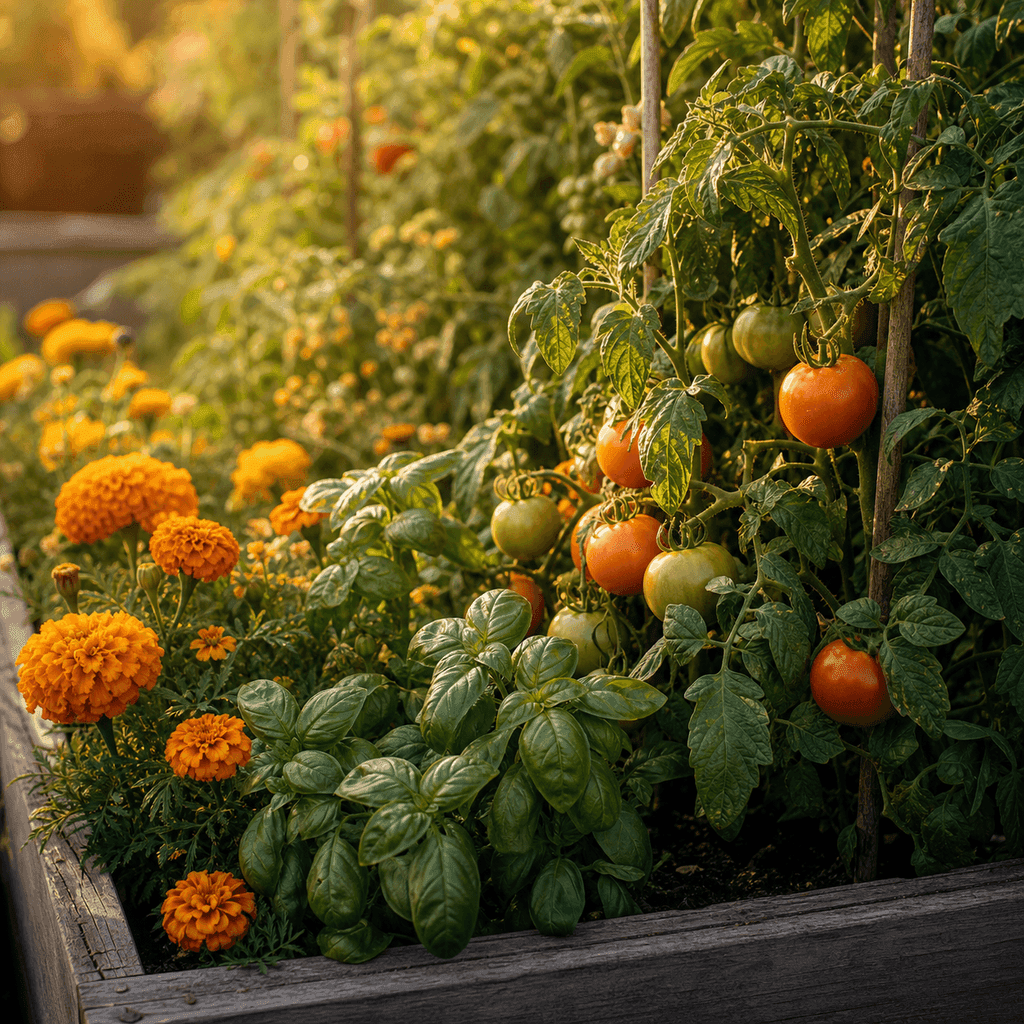
- Tomatoes + Basil + Marigolds: Basil is said to improve tomato flavor and deters hornworms, while marigolds repel nematodes and whiteflies.
- Carrots + Onions: Onions confuse the carrot fly, and carrots return the favor against onion pests.
- Corn + Beans + Squash: The classic Three Sisters. Corn provides a trellis for beans, beans fix nitrogen, and squash shades the soil and blocks weeds.
- Cucumbers + Nasturtiums: Nasturtiums lure aphids and beetles away from cucumbers as a trap crop.
- Lettuce + Tall crops: Plant lettuce beneath taller plants that offer cooling afternoon shade.
- Cabbage + Dill: Dill attracts wasps that prey on cabbage worms.
Combinations to avoid:
- Beans + Onions or garlic: Alliums can stunt the growth of legumes.
- Tomatoes + Brassicas: Cabbage-family plants compete heavily and can suppress tomatoes.
- Carrots + Dill: Mature dill can hinder carrot growth despite being useful elsewhere.
- Potatoes + Tomatoes: Both are prone to blight, and planting them together spreads disease fast.
Companion planting is less about rigid rules and more about diversity. A mixed, layered garden simply gives pests fewer easy targets and beneficial insects more reasons to visit.
The Power of Flowers and Herbs
Some of the most valuable companions are not vegetables at all. Marigolds are the workhorse of the companion garden, releasing compounds that suppress root-knot nematodes while their bright blooms draw pollinators. Nasturtiums serve as sacrificial trap crops, tempting aphids away from your prized vegetables.
Herbs pull double duty too. Basil, dill, cilantro, and mint all emit strong aromas that confuse or repel pests, and when allowed to flower they feed hoverflies, lacewings, and parasitic wasps, all natural predators of common garden pests. Tucking a few herbs and flowers throughout your beds is one of the easiest upgrades a beginner can make.
Planning Your Garden Layout
With your pairings chosen, sketch a simple map before you plant. Think in terms of height, spacing, and light. Place tall crops like corn and staked tomatoes on the north side of the bed so they don't shade shorter plants, then step down to medium and low growers moving south.
Interplant rather than segregating everything into rigid rows. Slipping basil between tomato plants or ringing a bed with marigolds weaves the benefits throughout the garden. Leave enough room for airflow, since crowding invites fungal disease, and remember that good spacing still matters even among friendly companions.
A Few Realistic Expectations
Companion planting is a helpful strategy, not a magic guarantee. Much of the traditional wisdom comes from generations of gardener observation, and while a lot of it holds up, results vary with your climate, soil, and local pests. Treat the chart as a strong starting point and let your own garden teach you the rest.
Keep notes each season on what thrived and what struggled. Over time you'll build a personalized version of this chart, tuned to your exact plot. That combination of proven pairings and hands-on observation is what turns a hopeful beginner into a genuinely skilled gardener, and it all starts with paying attention to who grows well next to whom.
James Carter
Composting & Soil Specialist
James is a lifelong allotment grower who's happiest with a fork in a compost heap. He covers composting, soil health, and closing the loop in the garden. More from James →