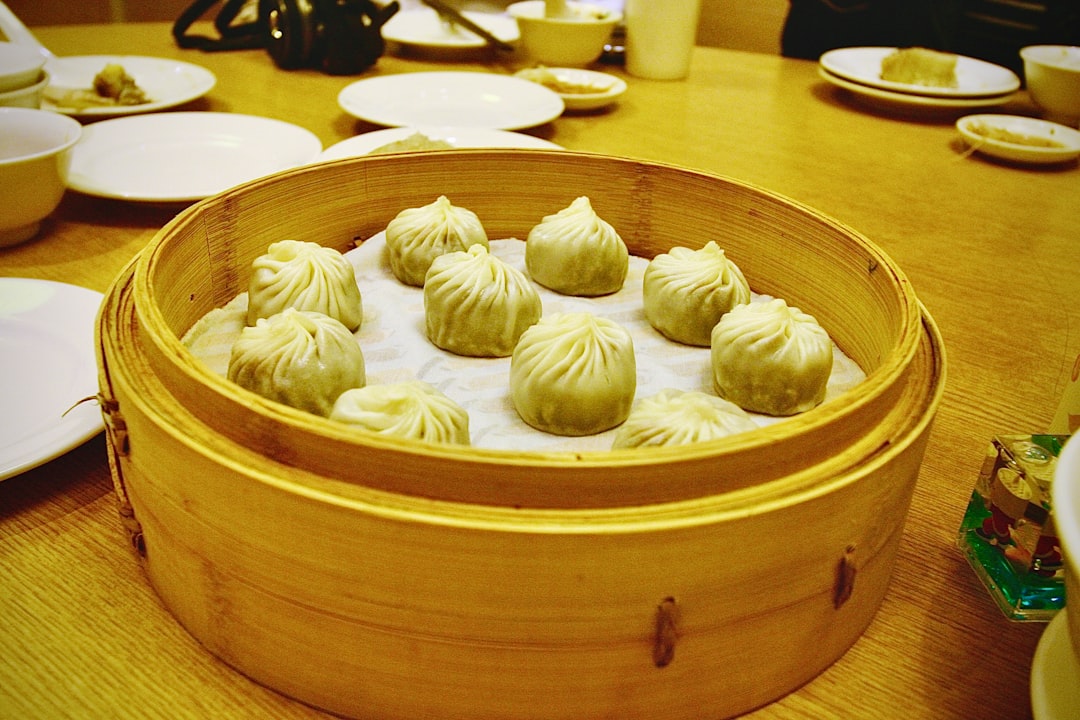
Dumplings are honestly why most people buy a bamboo steamer in the first place. And they’re also what trips up new users the most — sticking, tearing, filling that’s still cold in the middle. All of it’s avoidable. Here’s exactly what I’ve learned about getting them right.
Fresh vs Frozen Dumplings
Good news: both work beautifully in a bamboo steamer. Fresh ones are done in 6-8 minutes. Frozen dumplings need 8-10 minutes — and here’s the thing, don’t thaw them first. Just put them in straight from the freezer. This one surprised me when I first read it, but it works. The bamboo naturally soaks up the extra moisture that comes off frozen dumplings as they cook, which is why you get a noticeably better texture than you would with a stainless steel steamer. It’s one of those small differences that actually matters.
The Lining Is Everything
Seriously, never skip this step. Before any dumpling touches that basket, you need something between them and the bare bamboo. Parchment paper cut into circles is what I use almost every time — just punch a few holes or cut some slits so the steam can still move around. Napa cabbage leaves are the traditional way to do it and they actually add a really subtle flavor I love. You can also lay thin slices of carrot or daikon down as little platforms. Any of these work great. What doesn’t work? Skipping the lining entirely and wondering why your dumplings are welded to the basket.
Spacing Matters
Give each dumpling at least half an inch of breathing room on all sides. They puff up a little as they steam, and the steam itself needs to wrap around each one to cook it evenly. I crammed too many in once — my husband called them “the dumpling blob” — and half of them tore when I tried to separate them. One layer only, always. No stacking.
Water Level and Heat
Start with about two inches of water in your wok and get it to a full boil before the steamer goes on. Then turn it down to medium once you’ve set the basket in place. Around the 8-minute mark, peek at the water level. If it’s looking low, add more hot water — not cold, or you’ll drop the temperature fast. Running the wok dry is the number one way people scorch their bamboo, and honestly it’s just a sad thing to watch happen to a perfectly good steamer.
How to Tell When They Are Done
With pork or shrimp dumplings, the wrapper goes translucent and you can actually see the filling through it — that’s your visual cue. Vegetable dumplings look a little plump and puffy when they’re ready. Still not sure? Just cut one open. The filling should be steaming hot all the way through, with zero pink left in any meat. When I’m on the fence, I always just give them two more minutes. Better a little over than a cold center.
Final Thoughts
Honestly, perfect dumplings come down to three things every single time: a properly lined basket, enough space between each one, and keeping water in that wok. I know it sounds simple, but I messed up at least one of those three things every time I had a dumpling fail. Get those right and you’re good. So tell me — what’s your go-to dumpling? Soup dumplings? Potsticker style? Drop it in the comments, I’m always looking for new ones to try.
Check out our other eco-friendly guides.