Trench Composting: The Lazy No-Bin Method for Rich Soil
Trench composting skips the bin entirely. Bury your food scraps, cover with soil, and let underground decomposition feed your garden for you.
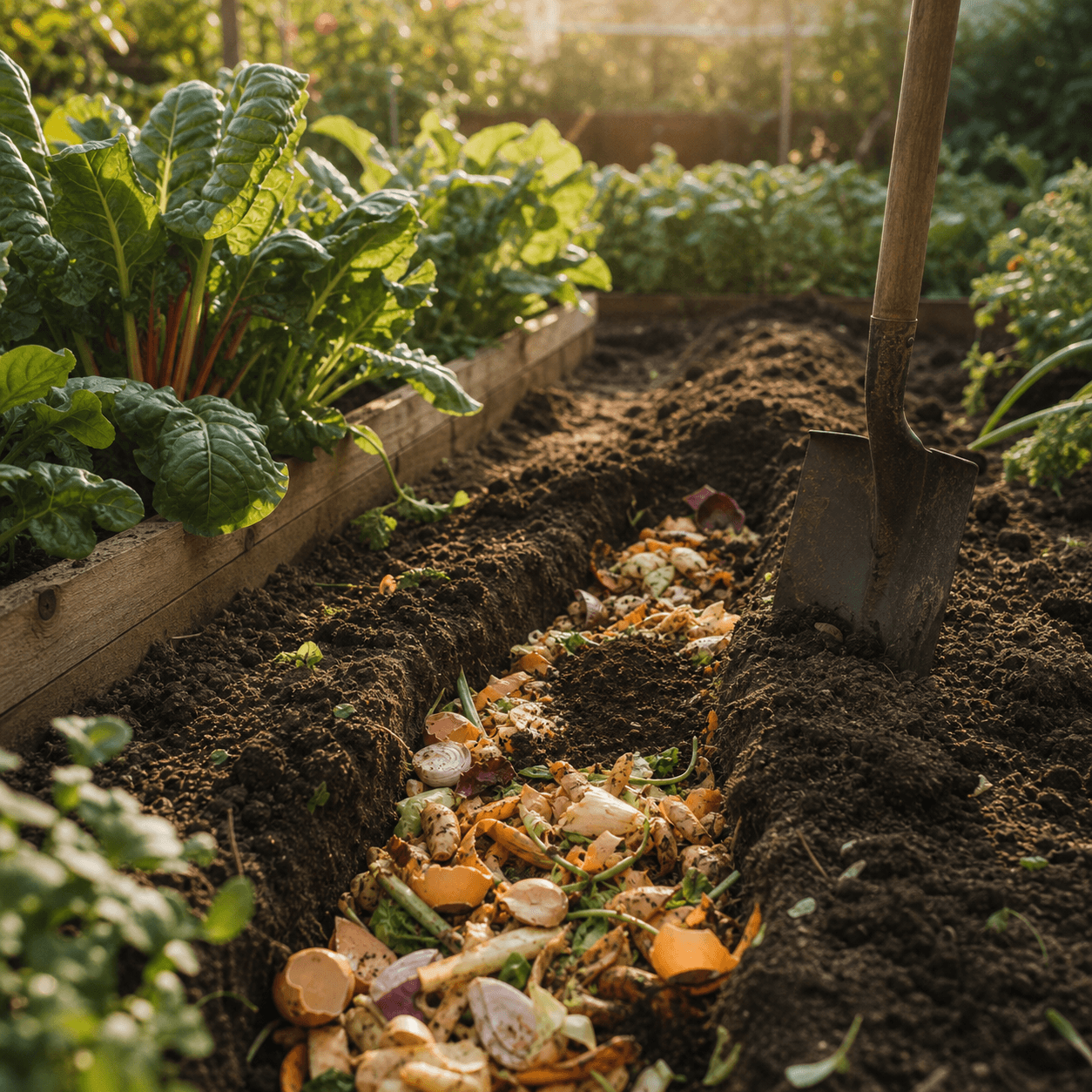
If the idea of turning a compost pile, balancing greens and browns, and monitoring temperatures makes you want to give up before you start, trench composting is your method. You dig a hole, bury your kitchen scraps, cover them with dirt, and walk away. That's the entire technique.
Trench composting is the closest thing to effortless soil-building there is, and it quietly solves some of the biggest headaches that make people abandon a traditional compost bin.
How Trench Composting Works
The concept couldn't be simpler. Instead of collecting scraps in a bin to decompose above ground, you bury them directly in the soil where they'll break down. Soil-dwelling microbes, fungi, and earthworms do all the labor, digesting the food and releasing nutrients right into the root zone.
Because everything happens underground, trench composting sidesteps the usual problems:
- No odor, because a foot of soil seals in smells.
- No pests, because buried food is out of reach of rodents and flies.
- No turning, because you're not managing an active pile.
- No unsightly bin taking up space in the yard.
The trade-off is that it's slower and less visible than a hot pile, and you can't easily "harvest" a batch of finished compost. But if your goal is richer soil with almost no effort, that trade is well worth making.
What You Can Bury
Trench composting actually handles a wider range of scraps than an open backyard pile, precisely because burial hides the food from animals.
Great choices:
- Fruit and vegetable scraps
- Coffee grounds and tea leaves
- Crushed eggshells
- Bread, pasta, and grains
- Trimmings and spent plants
Use caution with:
- Meat, fish, and dairy, which can still attract determined diggers unless buried deep, at least 12 inches down
- Anything diseased, which is better disposed of elsewhere
Chopping scraps into smaller pieces speeds everything up, since more surface area means faster breakdown. But even whole scraps will disappear given a little time.
The old English cottage gardeners had a saying that captured the whole philosophy: feed the soil, not the plant. Trench composting is that idea made literal, putting food directly into the earth that feeds your garden.
Three Ways to Trench
There's more than one way to work this into your garden, depending on how much space and planning you have.
- The simple trench. Dig a hole or trench about 12 inches deep in an empty bed, drop in a few inches of scraps, and backfill with soil. Wait a few weeks to a couple of months before planting on top.
- The English dig-and-drop. Instead of one long trench, dig individual holes wherever you have a scrap or two. It's ideal for small amounts and keeps you from having to store scraps.
- Trench rotation. Divide a bed into thirds: one strip for a walking path, one for trenching, one for growing. Each season you rotate, so every part of the bed gets a turn being enriched. This is the classic method for building consistently fertile beds over time.
When and Where It Shines
Trench composting is especially useful in a few situations. It's perfect for the off-season, when you can trench scraps into empty vegetable beds all winter and have them enriched and ready by spring. It works wonderfully around established perennials and fruit trees, where a shallow trench along the drip line feeds the roots without disturbing them. And it's a lifesaver for anyone in a neighborhood with strict rules or nosy raccoons, since there's nothing visible to object to.
A few practical pointers make it even easier:
- Keep a rotation map so you don't dig into a spot you filled last week.
- Dig deeper in areas with digging animals and firmly tamp the soil back down.
- Alternate your dig sites across the garden to spread the fertility around.
The Payoff Beneath the Surface
You won't get the visible, scoopable pile of black gold that a bin produces, but you'll get something arguably better: soil that steadily improves on its own. Earthworms follow the buried food, tunneling and aerating as they go, and their castings enrich everything around them. Over a season or two of casual trenching, you'll notice beds that hold moisture better, drain better, and grow visibly healthier plants.
For anyone who loves the idea of composting but hates the maintenance, trench composting removes every excuse. Grab a spade, dig a hole, bury today's scraps, and let the ground do the rest.
James Carter
Composting & Soil Specialist
James is a lifelong allotment grower who's happiest with a fork in a compost heap. He covers composting, soil health, and closing the loop in the garden. More from James →