How to Make Leaf Mold from Fall Leaves (The Easiest Compost)
Turn fall leaves into leaf mold, the effortless compost that improves any soil. All it takes is leaves, a little patience, and almost no work.
Every autumn, homeowners bag up one of the best soil amendments in the world and set it at the curb. Learning how to make leaf mold from fall leaves might be the single laziest, highest-reward move in gardening: you pile up leaves, walk away, and nature hands you black gold a year later.
Leaf mold isn't quite the same as regular compost, and understanding that difference is the key to getting it right without any fuss.
What Leaf Mold Actually Is
Regular compost is a hot, fast process driven mostly by bacteria feasting on a balanced mix of greens and browns. Leaf mold is different. It's cold decomposition, powered by fungi that slowly digest the tough carbon in leaves over many months.
Because it's fungal rather than bacterial, leaf mold:
- Doesn't heat up and doesn't need turning.
- Doesn't need a careful greens-to-browns ratio.
- Won't smell bad, even if you completely ignore it.
The finished product isn't a strong fertilizer. Its magic is physical. Leaf mold can hold several times its own weight in water, and worked into soil it creates the crumbly, sponge-like structure that plant roots love.
Which Leaves Work Best
Almost any deciduous leaf will break down eventually, but some are faster than others.
- Fast breakers: maple, birch, ash, fruit tree leaves. Thin and quick to decompose.
- Slow breakers: oak, beech, sycamore, magnolia. Waxy or leathery leaves that take longer.
- Use sparingly: walnut leaves contain juglone, a compound that can suppress some plants until fully broken down.
You don't have to sort them. Just know that a pile heavy on oak will simply take longer, so shredding those leaves first makes a real difference.
The most powerful trick in the whole process is shredding. Running a mower over your leaf pile before bagging it can cut the wait from eighteen months down to under a year.
Two Simple Methods
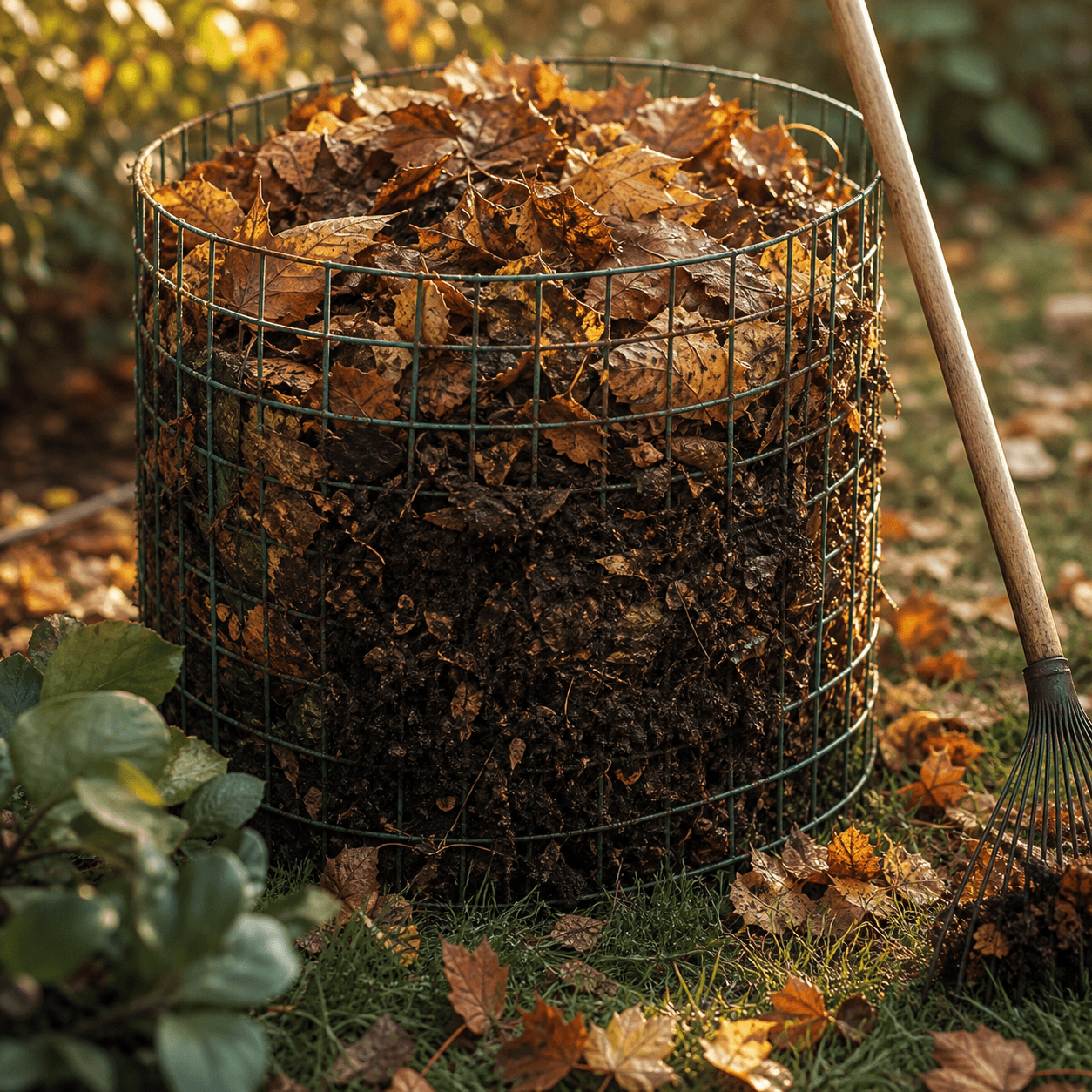
The pile or wire bin. The classic approach needs almost nothing. Rake leaves into a corner of the yard, or ring off a 3-foot circle of chicken wire or hardware cloth and fill it. Dampen the leaves as you go, and if you can, shred them first. That's it. Check the moisture a couple of times a year and otherwise leave it alone.
The plastic bag. Perfect for small yards or if you want it out of sight. Fill a large plastic trash bag with damp, shredded leaves, poke a dozen holes in it for airflow, tie it loosely, and tuck it behind the shed. Give it a shake every few months. The enclosed moisture often speeds things along.
How Long It Takes
Patience is the only real ingredient. A whole-leaf pile left alone typically takes twelve to eighteen months. Shredded and kept damp, you can have usable leaf mold in six to twelve months. You'll know it's ready when the individual leaves have vanished into a dark brown, crumbly material that smells sweet and earthy, like a walk in the woods after rain.
Partly finished leaf mold is still useful, so don't feel you have to wait for perfection. If it's mostly broken down with a few leaf fragments left, it works beautifully as mulch.
How to Use Your Leaf Mold
Once it's ready, this stuff earns its keep in more ways than you'd expect:
- Soil conditioner: Dig a couple of inches into vegetable beds each year to build structure and improve drainage.
- Mulch: Spread a 2-inch layer around perennials, shrubs, and trees to hold moisture and suppress weeds.
- Seed-starting mix: Well-rotted, sifted leaf mold makes a fine, low-nutrient base for starting seeds, often blended with compost and a little sand.
- Lawn top-dressing: A thin, sifted layer raked into the lawn feeds the soil beneath it.
The beauty of leaf mold is how it turns a seasonal chore into free garden gold. Instead of paying for bagged soil conditioner in spring, you spend twenty minutes with a rake in fall and let the fungi do the rest. Start a pile this autumn, forget about it, and next year you'll wonder why you ever sent those leaves to the curb.
James Carter
Composting & Soil Specialist
James is a lifelong allotment grower who's happiest with a fork in a compost heap. He covers composting, soil health, and closing the loop in the garden. More from James →