Natural Cleaning Products That Actually Outperform Chemical Ones
Discover the natural cleaning products that outperform chemical ones, from vinegar and baking soda to castile soap, for a spotless, low-cost, low-tox home.

I have been cleaning my whole house with natural products for three years now, and honestly? My home is just as clean as it was when I bought all those plastic bottles of conventional stuff. In some spots it is actually cleaner, and I am spending embarrassingly less money.
That surprises people, because we have been sold the idea that a spotless home requires a cabinet full of specialized sprays. It does not. The natural cleaning products that outperform chemical ones are cheap, simple, and probably already in your pantry. Here is exactly how I use each one.
White Vinegar: The All-Purpose Workhorse
Vinegar is acidic, which is precisely why it excels at dissolving mineral buildup, soap scum, and a lot of common bacteria. Mixed one-to-one with water in a spray bottle, it becomes a solid all-purpose surface cleaner, glass cleaner, and deodorizer all at once.
I keep a 50/50 bottle under the kitchen sink and reach for it constantly. Where it truly beats the chemical stuff is hard water. Spray it straight onto a crusty faucet or a foggy shower door, wait ten minutes, and the deposits wipe right off, something most commercial sprays can only dream of.
- Glass and mirrors streak-free with a dry cloth.
- Coffee makers descaled by running a vinegar-water cycle.
- Showerheads soaked in a vinegar-filled bag overnight to clear clogged nozzles.
One caution: skip vinegar on natural stone like marble or granite, since the acid can etch it, and never mix it with bleach.
Marketing taught us that clean has a smell. Real clean has no smell at all, just surfaces that squeak.
Baking Soda: Scrub and Deodorize
Baking soda is a mild abrasive, gentle enough to avoid scratching but tough enough to lift baked-on grime. It is my go-to for sinks, stovetops, and the inside of the oven.
Sprinkle it on, add a little water or a squeeze of castile soap to make a paste, and scrub. For odors, it is unmatched. An open box in the fridge, a sprinkle in the trash can, or a light dusting on carpet before vacuuming absorbs smells rather than masking them the way scented sprays do.
The Oven Trick
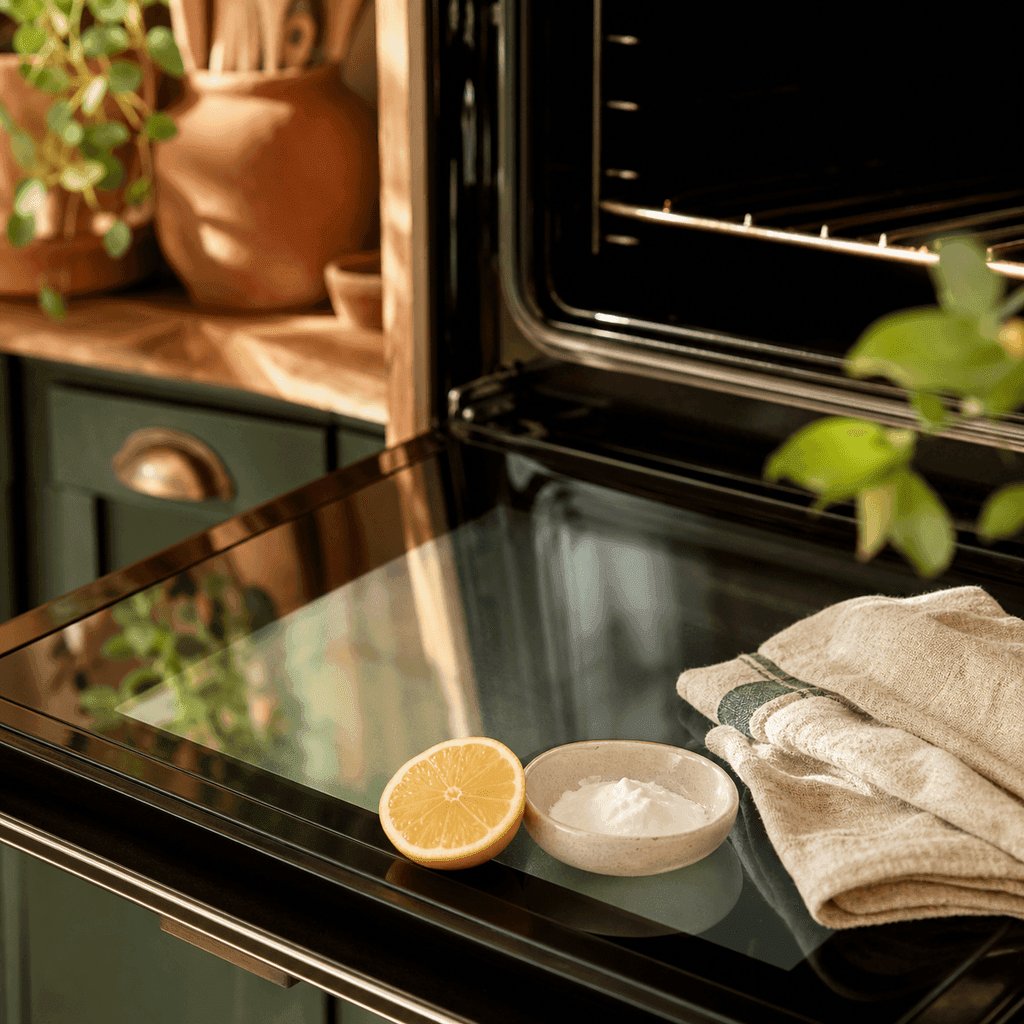
Coat the inside of a greasy oven with a baking soda paste, leave it overnight, then wipe clean and spritz any residue with vinegar to fizz it loose. No fumes, no toxic oven-cleaner gloves required, and it genuinely works better.
Castile Soap and Hydrogen Peroxide
These two round out the kit and cover what vinegar and baking soda cannot.
Liquid castile soap is a plant-based soap that cuts grease beautifully. A few drops in warm water makes a floor cleaner, a dish soap, or a gentle all-purpose spray. Because it is a true soap, a little goes a long way, so dilute generously.
Hydrogen peroxide (the standard 3 percent from the drugstore) is a genuine disinfectant. Poured into an opaque spray bottle to keep it from breaking down in light, it sanitizes cutting boards, brightens grout, and tackles stains. It beats many chemical disinfectants because it breaks down into just water and oxygen.
Why Natural Often Wins
The advantage is not only that these products are safer to breathe around and better for waterways. It is that they frequently do the job better. Vinegar dissolves hard water that chemical sprays smear around. Baking soda scours without scratching. Peroxide disinfects without leaving a residue you then have to rinse.
Add in the cost, likely a tenth of what you were spending, and the plastic bottles you stop buying, and the case makes itself. Set up four containers, learn which one handles which mess, and you will find yourself reaching for the fancy stuff less and less until, one day, you realize you have not bought it in years.
Sarah Mitchell
Founder & Editor
Writer, home cook, and slightly obsessive gardener sharing small, doable ways to live a little lighter. Sarah started Earth Friendly Blogs at her own kitchen table. More from Sarah →