How to Use Reusable Kitchen Cloths Safely
Separate kitchen-cloth jobs, change contaminated cloths promptly, wash them correctly and dry them completely without pretending one cloth fits every cleanup.
Reusable kitchen cloths can replace many routine paper-towel jobs, but only when the cleaning system is as deliberate as the purchase. The central rule is simple: separate jobs, remove contaminated cloths promptly, wash them, and dry them completely.
This guide covers household cloth handling. It is not a microbial test, a substitute for local food-code requirements, or proof that one fabric is inherently safer than another.
Give each cloth one job at a time
| Job | Starting setup | Remove the cloth when |
|---|---|---|
| Drying clean hands | A clean hand towel on its own hook | It becomes damp, dirty, smelly or contaminated during food preparation |
| Routine counters and spills | A separate clean wiping cloth | It picks up food soil or moves into a higher-risk task |
| Food-preparation surface | A fresh cloth plus the correct cleaning or sanitizing method for the task | It contacts raw animal-food juices or another contamination source |
| Dishes | A clean dishcloth or suitable scrubber that can be washed and dried | Food remains trapped, the tool smells, stays damp or begins to break down |
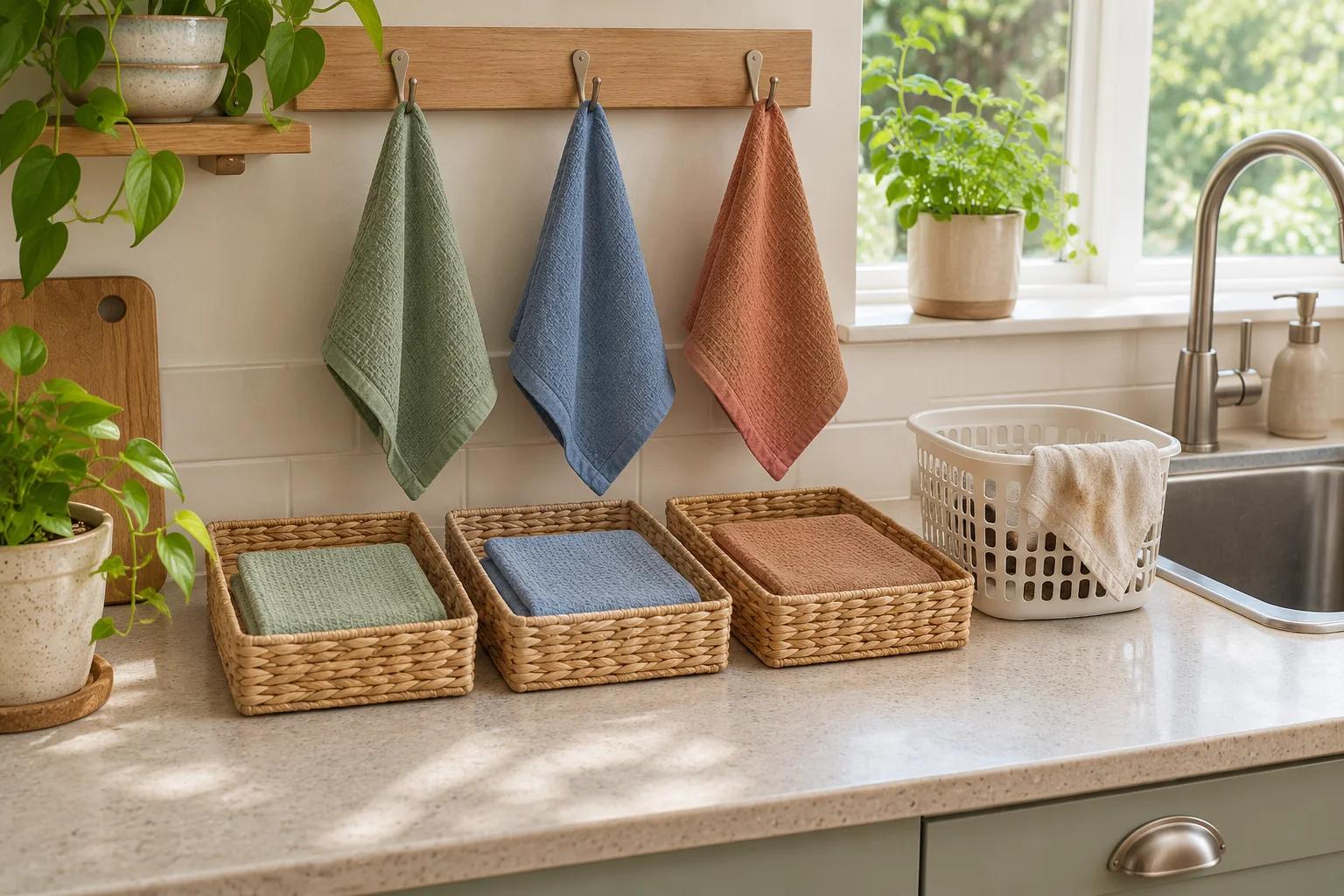
Color can make the system easier to remember, but color itself does not sanitize a cloth. Separate hooks, baskets or storage zones work only when household members use them consistently.
Treat raw-meat cleanup as a change point
FoodSafety.gov says to wash cutting boards, dishes, utensils and countertops with hot, soapy water after contact with raw meat, poultry, seafood or eggs. It also recommends keeping raw and ready-to-eat food equipment separate.
The University of Nebraska–Lincoln's reviewed guidance says a towel used on raw meat, poultry or seafood juices should go immediately into the laundry and be replaced with a clean one. A disposable towel can be a sensible exception when using a cloth would spread contamination on the way to the hamper or mix it with other tasks.
Wash often and dry completely
FoodSafety.gov says to wash dishcloths often in the hot cycle of the washing machine. UNL likewise advises a hot wash and complete drying, while the cloth's own care label still matters. Use detergent and avoid overloading the washer so the items can move and rinse.
Do not leave a used damp cloth balled in a closed container or on the counter. Put it in a ventilated collection point if it cannot be washed immediately, without letting it contact clean linens or food-preparation tools.
The University of California Cooperative Extension's 2026 home-kitchen guidance recommends changing cloths when dirty or smelly and using a fresh cloth after wiping spills, especially meat juices. It also distinguishes cleaning from sanitizing: wiping alone is not proof that a food-contact surface is sanitized.
Use triggers, not a false universal schedule
A daily fresh-cloth routine is easy to remember, and UNL notes it as a common recommendation. But a calendar cannot capture every task. Change sooner when a cloth:
- touches raw meat, poultry or seafood juices;
- moves from the floor, trash area or pet mess to a food area;
- is visibly dirty, smells, or remains damp;
- has been used during an illness cleanup; or
- frays or traps debris so it can no longer be cleaned reliably.
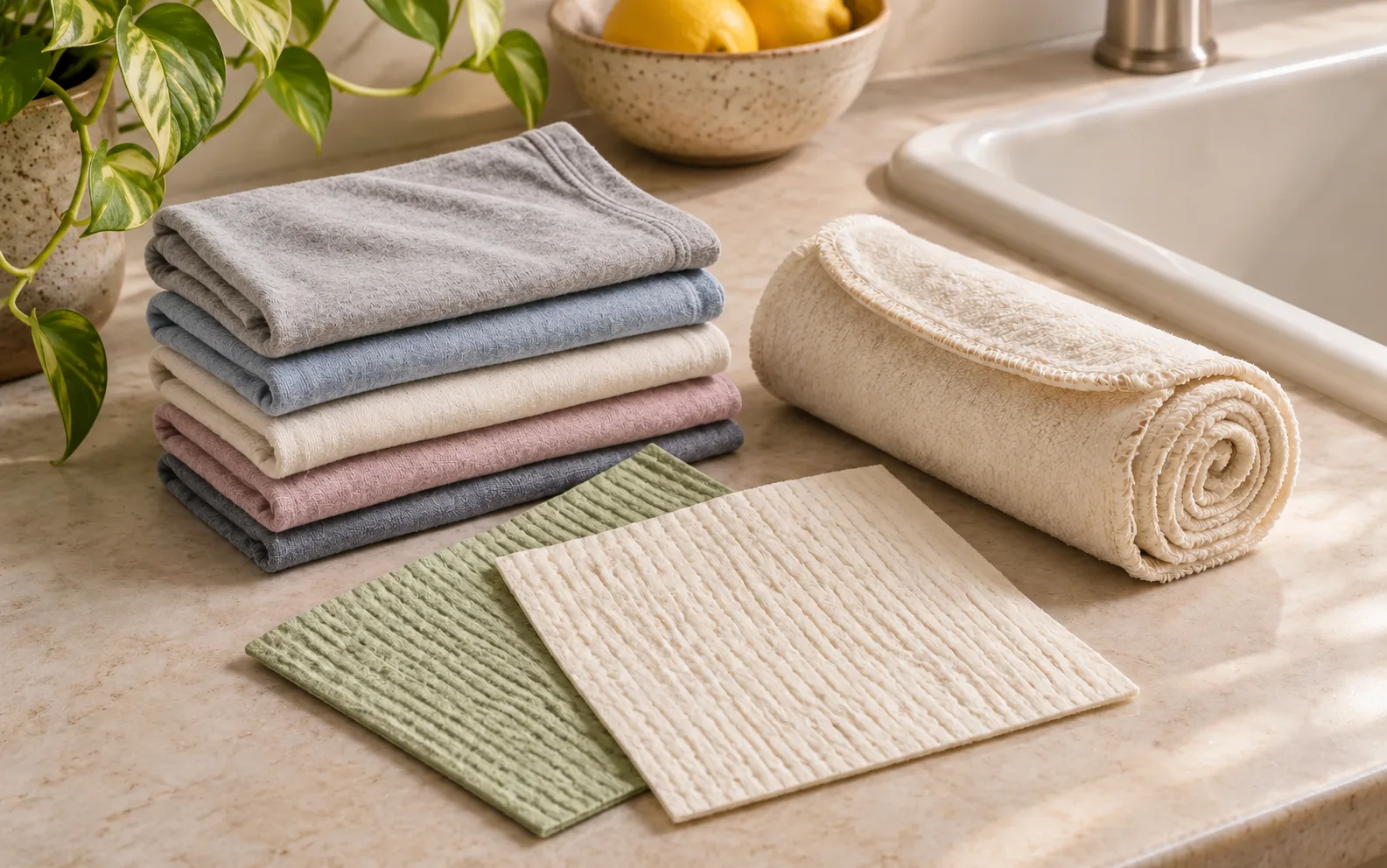
For low-risk routine use, rotate enough cloths that a clean, dry one is always available. Buying twenty special “unpaper towels” is not required; clean cotton cloths already in the home may work if they can be laundered appropriately.
Start with a four-zone setup
- Put a clean hand towel on its own hook.
- Store clean wiping cloths away from the used-cloth basket.
- Keep a separate cloth or tool for dishes and food-preparation work.
- Place a ventilated laundry container close enough that a contaminated cloth can be removed immediately.
Then explain the system to everyone who uses the kitchen. If the colored cloths become interchangeable by the second day, simplify the setup until the separation is obvious.
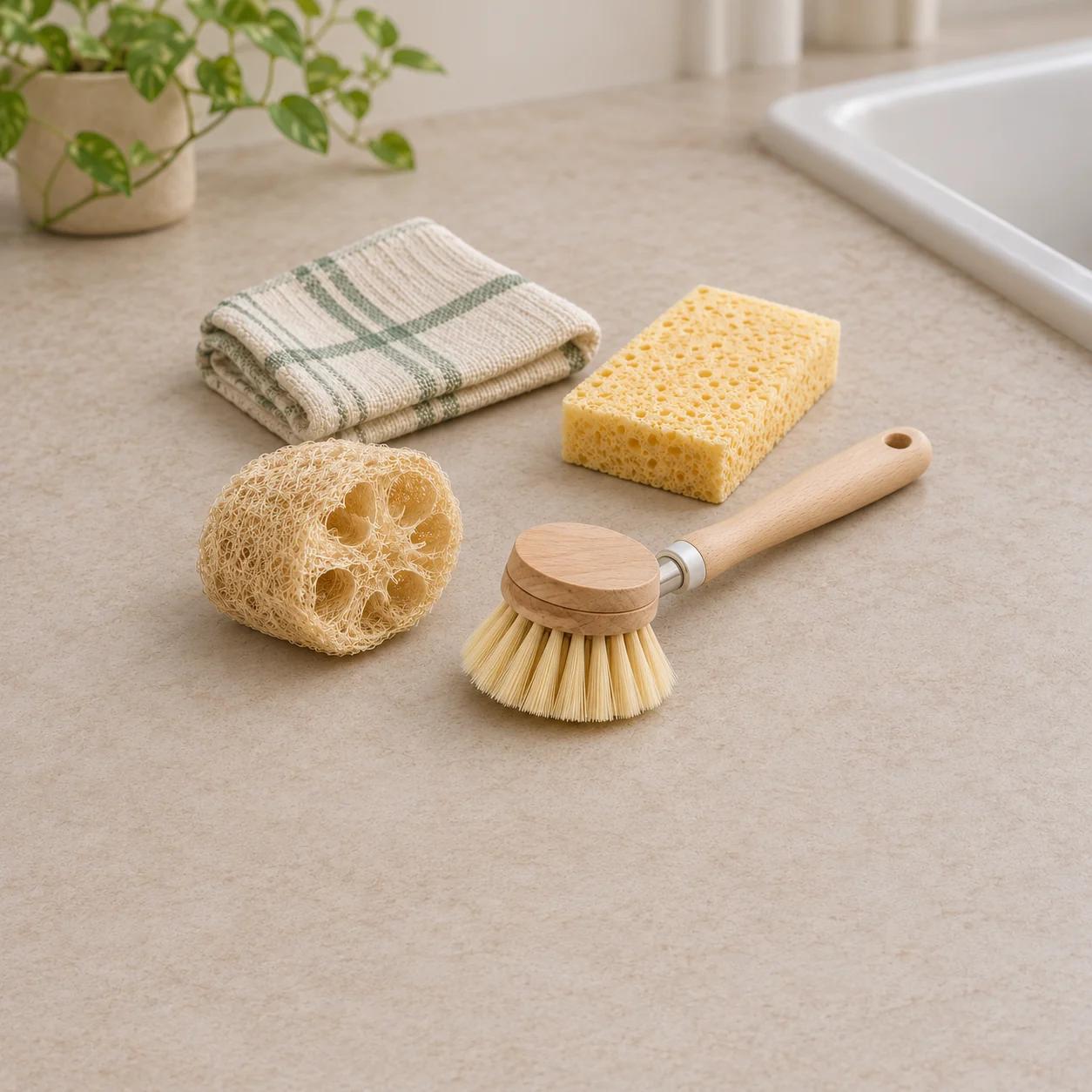
For choosing the cloth material and format, use the reusable paper-towel alternatives guide. For brushes, loofah and other dish tools, continue with the kitchen sponge-alternatives guide.
Research note, 24 November 2026: task separation, laundering and food-safety guidance comes from FoodSafety.gov, UNL and UC Cooperative Extension. We did not culture cloths, test washing cycles, compare fabrics or measure paper savings. The cover is generated editorial artwork illustrating a separation system, not a tested kitchen.
Frequently Asked Questions
Can I replace every paper towel with a reusable cloth?
Not necessarily. Reusable cloths suit routine wiping when you can separate tasks and launder them promptly. For raw meat juices or another high-risk mess, a disposable towel may be practical if a cloth cannot go straight into the laundry without contaminating other surfaces.
How often should I change a kitchen cloth?
Change it based on use, not only the calendar. Put it into the laundry immediately after raw meat, poultry or seafood juices, and change it when visibly dirty or smelly. UNL notes a common daily-change recommendation while emphasizing that use determines when a cloth must be changed sooner.
Can the same towel dry hands and wipe counters?
Task separation reduces the chance of transferring contamination. Keep a clean hand towel separate from cloths used for counters, dishes or food-preparation cleanup, and replace either cloth when contaminated.
How should reusable kitchen cloths be washed?
FoodSafety.gov says to wash dishcloths often in the hot cycle of the washing machine. Follow the item's care label, use detergent, and dry cloths completely. Do not let a contaminated damp cloth sit balled on a counter.
Earth Friendly Blogs Editorial Team
Research & Editorial
We turn trusted guidance and practical research into clear, approachable steps for a lower-waste home. Every guide is reviewed for usefulness, accuracy, and honest limitations before publication. Our editorial approach →