How to Deep Clean Your Kitchen the Eco-Friendly Way
Learn how to deep clean your kitchen the eco-friendly way using just vinegar, baking soda, castile soap, and hot water, with a room-by-room walkthrough.
Deep cleaning the kitchen used to mean hauling out a whole lineup of sprays and ending up with burning eyes and a low-grade headache by the time I was done. These days I clean the entire room with four ingredients, and honestly? The results are just as good, and way better for things like descaling and getting rid of funky smells. Here's how to deep clean your kitchen the eco-friendly way, one zone at a time.
Your Four-Ingredient Arsenal
White vinegar, baking soda, liquid castile soap, and hot water. That's the whole kit. I keep all four under the kitchen sink so they're just there when I need them.
- White vinegar cuts grease, dissolves mineral scale, and neutralizes odors
- Baking soda is a gentle abrasive that scrubs and deodorizes without scratching
- Castile soap is a plant-based all-purpose cleaner for dishes, counters, and floors
- Hot water loosens grime and makes everything work better
One caution worth remembering: never mix vinegar and castile soap directly. The acid curdles the soap into a clumpy mess. Use them for separate tasks, not in the same bottle.
The magic isn't any single ingredient, it's baking soda and vinegar used in sequence. Sprinkle baking soda to scrub, then spritz vinegar to fizz away what's left. That one-two punch handles almost every stubborn spot in the kitchen.
Counters, Cabinets, and Surfaces
Start high and work down, so crumbs and drips fall onto surfaces you haven't cleaned yet.
- Mix a squirt of castile soap into a bowl of hot water for an all-purpose surface cleaner
- Wipe cabinet fronts, backsplash, and counters with a damp cloth
- For sticky or greasy spots, make a paste of baking soda and water, let it sit a minute, then scrub
- Skip vinegar on natural stone like granite or marble, since the acid can etch the finish
Sink and Drain
The sink takes the most abuse, so give it real attention.
Scrub and Shine
Sprinkle baking soda around the basin and scrub with a damp brush. It lifts stains and leaves the metal bright without scratching.
Freshen the Drain
Pour a half cup of baking soda down the drain, follow with a cup of warm vinegar, and let it fizz for ten minutes. Flush with a kettle of hot water. It clears buildup and knocks out odors naturally.
Appliances
This is where vinegar really earns its keep.
- Microwave: heat a bowl of water with vinegar and a few citrus peels for a few minutes, then wipe. The steam loosens splatters so they wipe right off.
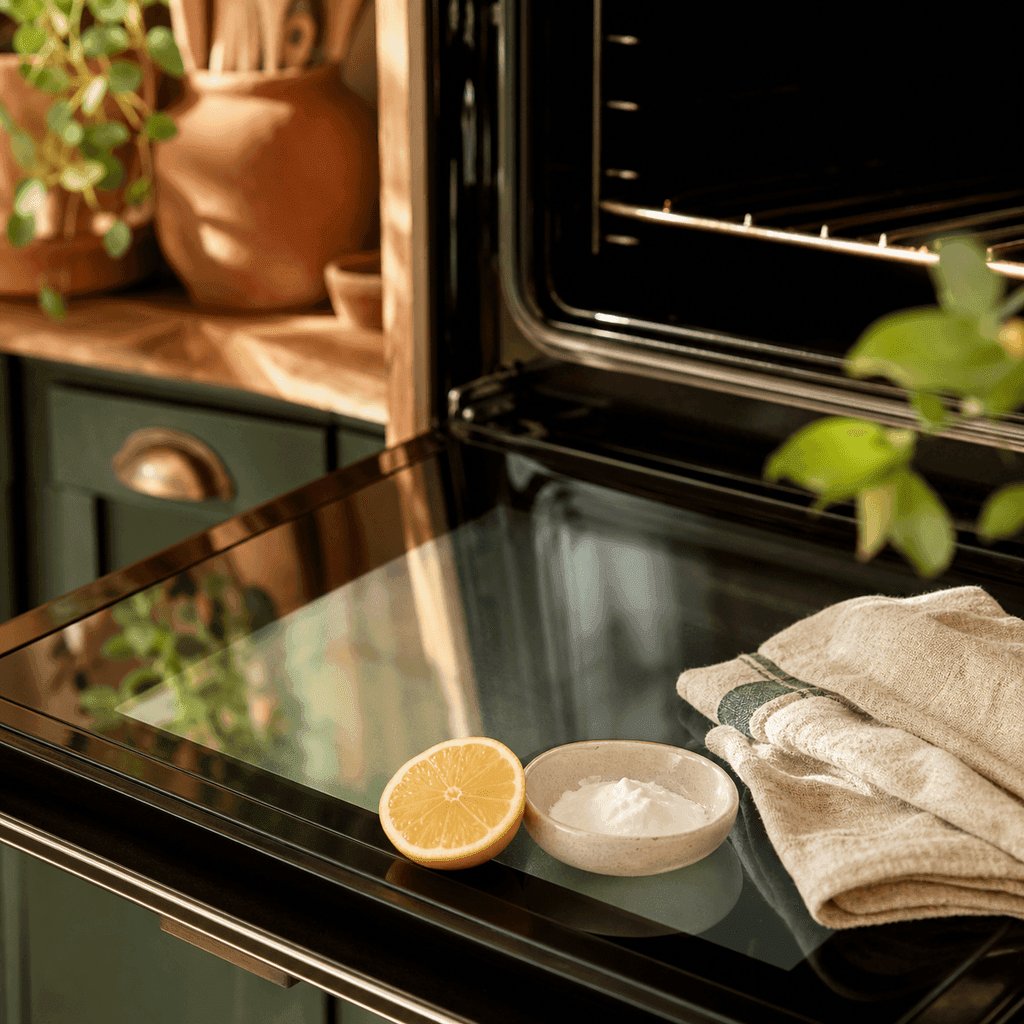
- Oven: coat the interior in a thick baking soda paste, leave it overnight, then scrub and wipe. Spritz stubborn spots with vinegar to help lift them.
- Refrigerator: wash shelves with castile soap and warm water, and leave an open box of baking soda inside to absorb odors.
- Dishwasher: run an empty cycle with a cup of vinegar in a bowl on the top rack to descale and freshen.
Stovetop and Range Hood
Grease is the enemy here, and hot soapy water plus baking soda handles it.
- Wipe the stovetop with castile soap and hot water while it's slightly warm, since grease lifts more easily
- Make a baking soda paste for baked-on spots and let it sit before scrubbing
- Soak greasy range hood filters in hot water with a good squirt of castile soap, then rinse
Floors and Finishing Touches
Finish at the bottom. Mop with a few drops of castile soap in a bucket of hot water, wringing the mop well so you're not soaking the floor. Empty and wipe out the trash and compost bins, take out anything damp, and give the counters a final pass.
That's a full eco-friendly deep clean with four simple ingredients you probably already own. No fumes, no plastic spray bottles piling up, and a kitchen that's genuinely clean rather than just masked in synthetic "fresh linen" scent.
Olivia Reed
Sustainable Kitchen Writer
Olivia writes about low-waste cooking, plastic-free storage, and getting the most out of every ingredient. She tests every swap in her own small-city kitchen. More from Olivia →