How to Build a Zero Waste Pantry Step by Step
A step-by-step guide to building a zero waste pantry, from auditing what you have to shopping bulk bins and storing staples in reusable glass jars.
My pantry used to be an embarrassing mess of half-open chip clips, orphaned box tops, and mystery bags I was pretty sure were bulgur (they were not). Now it's all glass jars, labeled in my terrible handwriting, and I pick up most of our staples from the bulk bins at our co-op. The shift to a zero waste pantry took maybe two months, cost almost nothing to get started, and honestly made cooking feel calmer. Here's how to do it step by step.
Step 1: Empty It Out and Take Stock
Before you change a single thing, pull everything out and actually look at what you have. This is the step people want to skip, and it's the most important one.
- What do you genuinely cook with every week?
- What's been hiding behind the quinoa since last January?
- What's expired, stale, or clearly never getting used?
Use up or donate the stuff you never reach for before building a new system. Otherwise you're just organizing clutter into prettier jars.
A zero waste pantry doesn't start with buying anything. It starts with using up what you already own. The most sustainable jar of lentils is the one already sitting in your cupboard.
Step 2: Find Your Package-Free Sources
Once you know what you actually use, figure out where to buy it with less packaging.
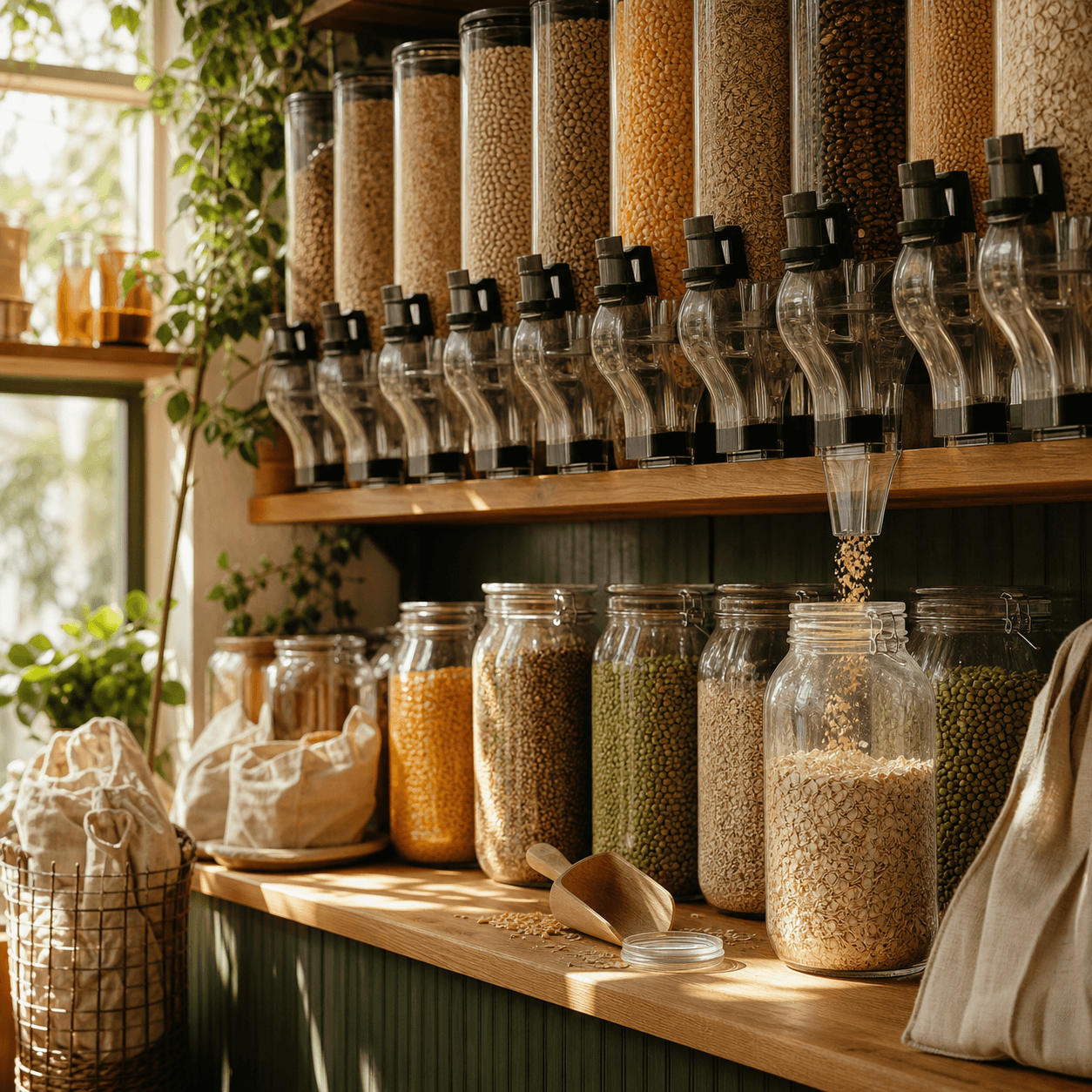
- Bulk bins at co-ops, natural grocers, and some conventional stores let you scoop grains, beans, nuts, flour, and spices into your own containers
- Refill shops carry pantry staples and often cleaning supplies too
- Farmers markets for package-free produce and sometimes bulk eggs or grains
- Paper or glass packaging when bulk isn't an option, since both recycle far more easily than plastic
Call ahead and ask if you can bring your own containers. Most bulk stores will weigh (tare) your empty jar at the register so you only pay for the contents.
Step 3: Store It Right
Good storage is what makes a zero waste pantry actually work, because food you can see is food you'll use before it spoils.
Glass Jars Are Your Friend
Mason jars, recycled sauce jars, and clip-top jars all work. Glass is airtight, doesn't stain or hold smells, and lets you see exactly how much you have left.
Label Everything
Note what's inside and, ideally, the date. A grease pencil, chalk labels, or masking tape all do the job. This one habit ends the great bulgur-versus-couscous mystery for good.
Match Jar to Turnover
Keep fast-moving staples like rice and oats in big jars up front, and slower items like specialty flours in smaller ones so nothing goes stale waiting its turn.
Step 4: Build It Gradually
You do not have to convert everything at once, and trying to is the fastest way to burn out. Replace items as they run out.
When the box of pasta is empty, that's your cue to refill from the bulk bin next trip. When the plastic tub of oats is done, transfer your next bulk scoop into a jar. Within a couple of months, most of your pantry has quietly converted itself with almost no effort or upfront cost.
Keeping Waste Low Long-Term
A zero waste pantry stays that way with a few ongoing habits:
- Shop your pantry first and plan meals around what's already open
- Buy only what you'll use before it goes stale, since bulk isn't a bargain if it spoils
- Rotate stock by moving older items to the front
- Compost anything that does slip past its prime
Do that, and your pantry becomes a system that runs itself: less packaging, less waste, less money spent, and far fewer mystery bags lurking behind the quinoa.
Sarah Mitchell
Founder & Editor
Writer, home cook, and slightly obsessive gardener sharing small, doable ways to live a little lighter. Sarah started Earth Friendly Blogs at her own kitchen table. More from Sarah →