Can You Freeze Food in Glass Jars? A Headspace and Jar-Choice Guide
Use freezer-safe glass jars without one-size-fits-all rules: choose the right jar, leave food-specific headspace, seal, label and thaw carefully.
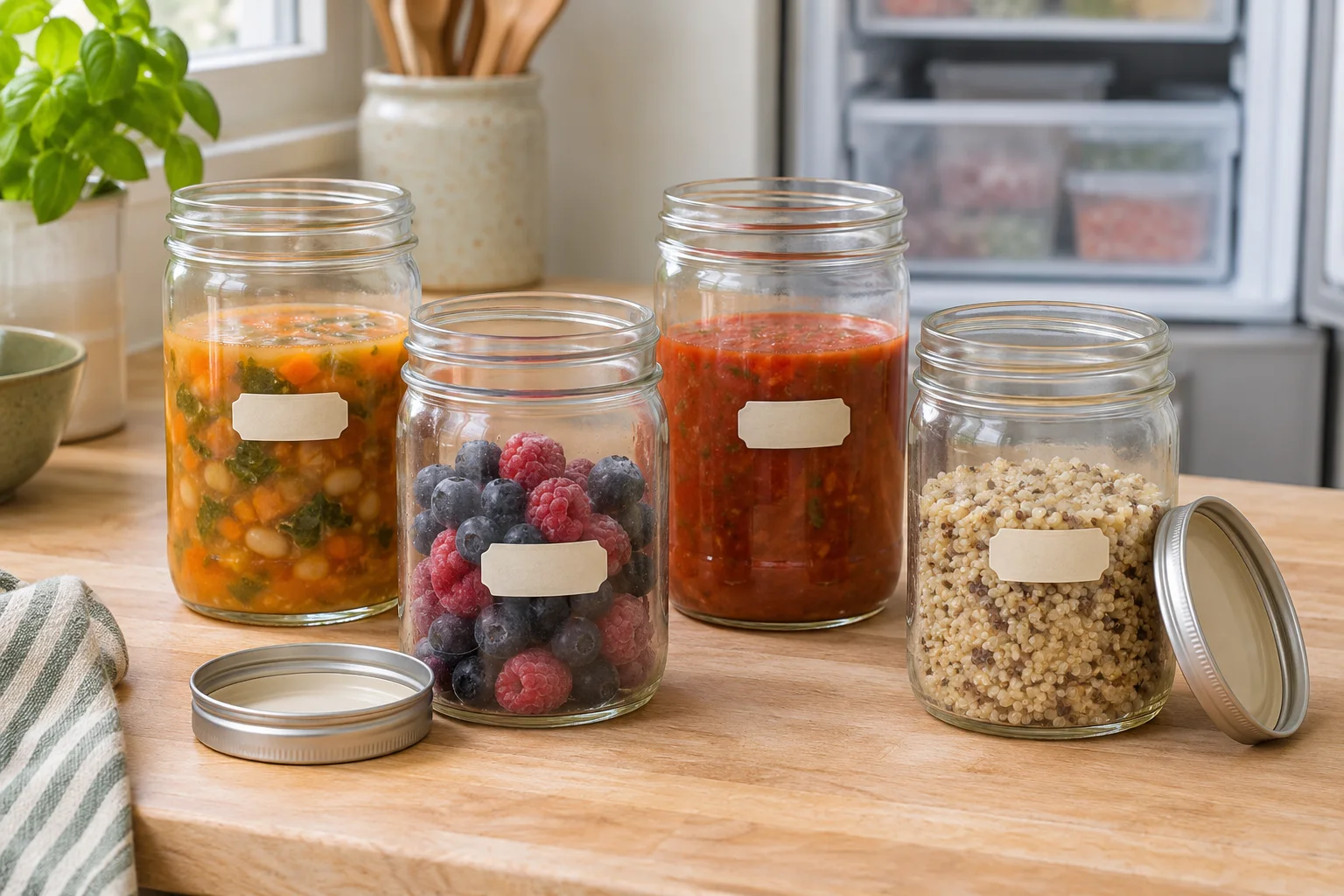
You can freeze food in glass jars, but the safe decision begins with the exact jar, not with a social-media headspace trick. Regular glass may break at freezer temperatures. A suitable jar, the right amount of expansion room and a tight seal all matter.
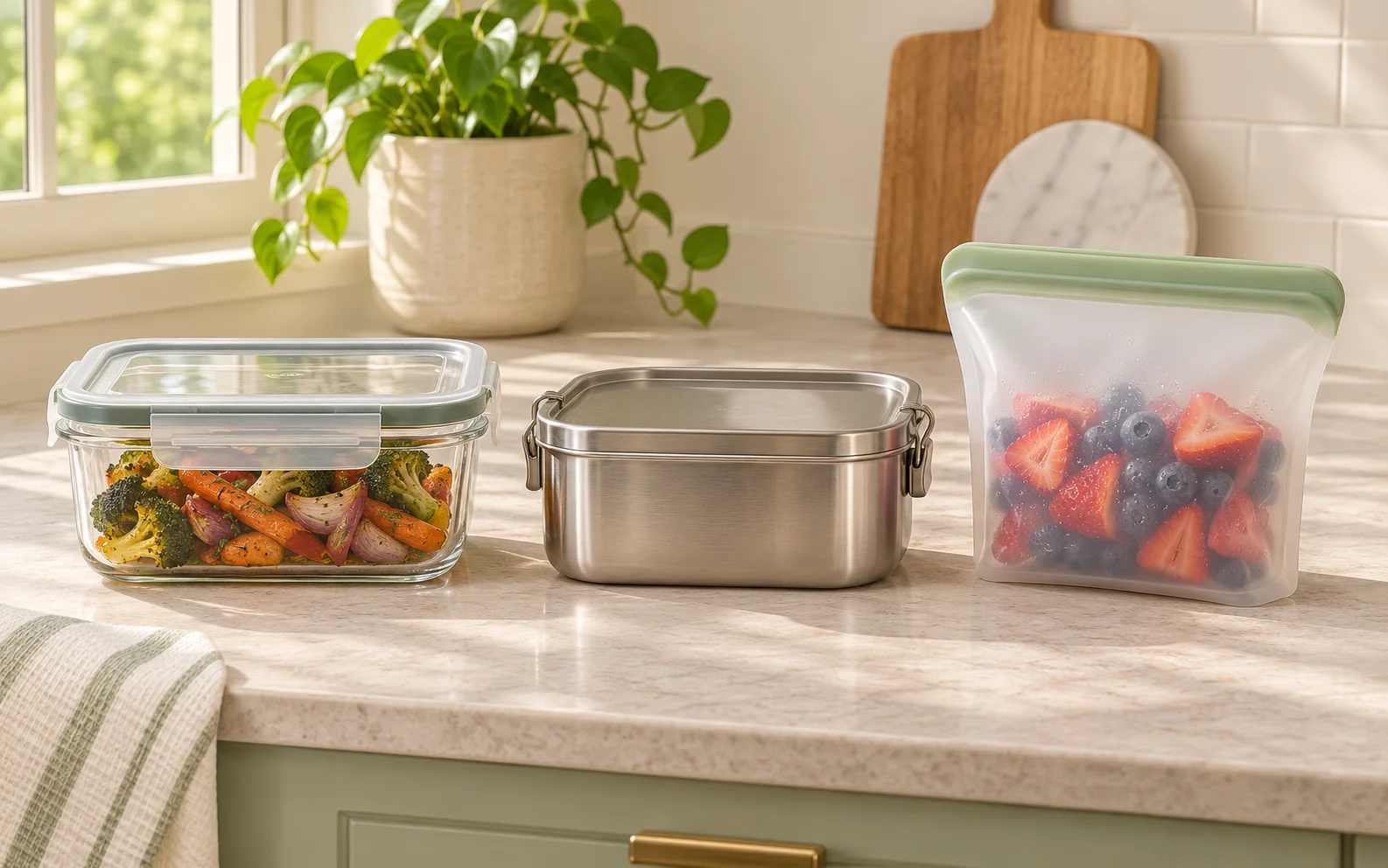
This is a source-based handling guide, not a test of a jar brand. If you want to compare glass with stainless containers or reusable bags, start with how to freeze food without plastic bags.
Use this jar check before filling
| Check | Prefer | Why it matters |
|---|---|---|
| Intended use | A jar the maker identifies for freezing and canning | Regular household glass can break at freezer temperature. |
| Opening and sides | A wide mouth and straight sides | It is easier to remove partially thawed food and expansion is not trapped at a narrow neck. |
| Condition | A clean jar with no visible chip, crack or damaged rim | Damage undermines a reliable seal and may increase breakage risk. |
| Closure | A clean, dry rim and tight-fitting freezer-suitable cover | Air exposure dries food and causes freezer burn. |
The National Center for Home Food Preservation warns that regular glass jars break easily at freezer temperatures and recommends wide-mouth dual-purpose jars made for freezing and canning. It notes that narrow-mouth canning jars need extra headspace because liquid expansion can break the jar at the neck.
Headspace is a table, not one magic number
Headspace is the empty space between the food and the closure. Most packed foods need room to expand as they freeze, though NCHFP lists loose-packed vegetables such as broccoli and asparagus as an exception.
For fruit packs, NCHFP's headspace table shows why “always leave one inch” is too crude:
| Pack | Wide-mouth pint | Wide-mouth quart | Narrow-mouth pint | Narrow-mouth quart |
|---|---|---|---|---|
| Liquid pack | 1/2 inch | 1 inch | 3/4 inch | 1 1/2 inches |
| Dry pack | 1/2 inch | 1/2 inch | 1/2 inch | 1/2 inch |
| Juice | 1/2 inch | 1 inch | 1 1/2 inches | 1 1/2 inches |
Those are fruit-pack values, not a universal soup chart. Find tested guidance for the food you are freezing, then match its pack type and container.
Fill, close and label the jar
- Prepare and cool the food using authoritative food-specific guidance. FoodSafety.gov says to place leftovers in shallow containers and refrigerate them promptly; do not leave perishable food on the counter to cool indefinitely.
- Inspect the freezer-rated jar and closure. Do not use a chipped or cracked jar.
- Fill the portion and leave the specified headspace. Wipe the sealing surface clean and dry.
- Close the container as its maker directs. NCHFP says rigid-container covers should fit tightly; leaving every jar open until frozen is not its general recommendation.
- Label the food and date. Freeze at 0°F (-18°C) or below and confirm the temperature with an appliance thermometer.
Thaw without a temperature shock
Move perishable food to the refrigerator to thaw. Do not set a frozen glass jar into hot water or a hot oven, and do not place a hot jar directly into a cold freezer unless the exact jar maker explicitly supports that transition. Sudden temperature changes can stress glass.
Some foods must thaw fully before they can be removed from a jar. Wide-mouth straight-sided jars make partial removal easier, but never strike, pry or force frozen food from glass.
What this guide does not prove
Glass is reusable, visible and easy to label, but this guide does not claim that it is always the lowest-impact container. A jar that breaks, leaks or is too large for the portion is not a useful swap. Reuse an appropriate container safely and choose another freezer-rated format when glass does not fit the food or household routine.
For food types that do not fit a jar, return to the container-by-container freezing guide. For pantry, refrigerator and lunch storage, compare non-plastic food-storage containers.
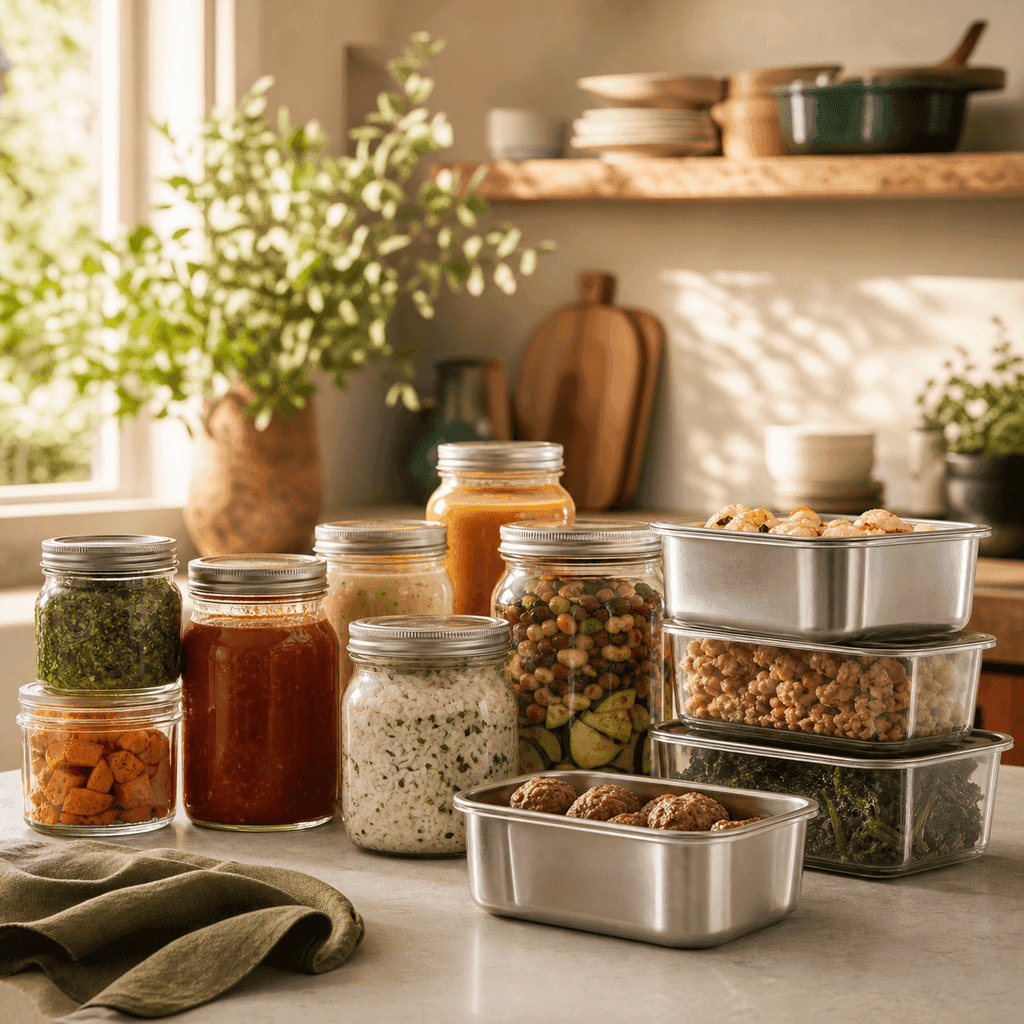
Research note, 24 November 2026: jar selection, headspace and freezer-temperature guidance comes from NCHFP and FoodSafety.gov. We did not freeze food, test thermal shock, inspect a specific brand, or calculate container footprints. The cover is generated editorial artwork; its jars illustrate the selection and headspace concepts and are not tested products.
Frequently Asked Questions
Can any Mason jar go in the freezer?
Do not rely on the Mason-jar shape or name alone. NCHFP recommends wide-mouth dual-purpose jars made for freezing and canning because regular glass breaks more easily at freezer temperatures. Confirm the exact jar maker's freezer instructions.
How much headspace should I leave in a freezer jar?
It depends on the food, whether it is liquid- or dry-packed, the jar size, and whether the opening is wide or narrow. NCHFP's fruit table ranges from 1/2 inch to 1 1/2 inches. Use the applicable food-specific table rather than a universal number.
Should a freezer jar be left open until the food freezes?
NCHFP says rigid freezer containers should have tight-fitting covers and airtight packaging protects against freezer burn. Headspace, a suitable jar and the maker's directions—not leaving every jar open—are the reliable controls.
Can I put hot food in a glass jar and freeze it?
Follow the jar maker and a tested food-safety cooling method. FoodSafety.gov says leftovers should be placed in shallow containers and refrigerated promptly. Avoid abrupt temperature changes and do not assume every jar is designed for hot-to-frozen transitions.
Earth Friendly Blogs Editorial Team
Research & Editorial
We turn trusted guidance and practical research into clear, approachable steps for a lower-waste home. Every guide is reviewed for usefulness, accuracy, and honest limitations before publication. Our editorial approach →