Zero-Waste Period Products: A Complete Beginner's Guide
A friendly guide to zero-waste period products, from menstrual cups to cloth pads and period underwear, with real costs and how to choose.
The average person who menstruates will use thousands of disposable pads and tampons over a lifetime, and nearly every one of them ends up in a landfill. If you've ever felt a twinge of guilt tossing that packaging every month, switching to zero-waste period products is one of the most impactful and surprisingly comfortable swaps you can make.
The category has grown far beyond the single menstrual cup people picture. There's now a reusable option to suit almost every body, flow, and comfort level, and this guide walks through all of them.
Why Make the Switch
The environmental case is straightforward. Conventional disposables are largely plastic, from the applicators to the backing to the individual wrappers, and they can take centuries to break down. A single reusable product replaces a mountain of them.
But the benefits aren't only ecological:
- Cost savings. Disposables are a recurring expense that adds up to hundreds of dollars over the years. A reusable pays for itself within months.
- Fewer trips to the store. No more late-night runs when you realize you're out.
- Materials you can see. Medical-grade silicone and organic cotton, rather than a mix of undisclosed materials and fragrances.
None of this requires going all-in overnight. Many people start with one product and build from there.
The Main Options, Explained
Each type suits different needs, so it helps to know what you're choosing between.
Menstrual Cups
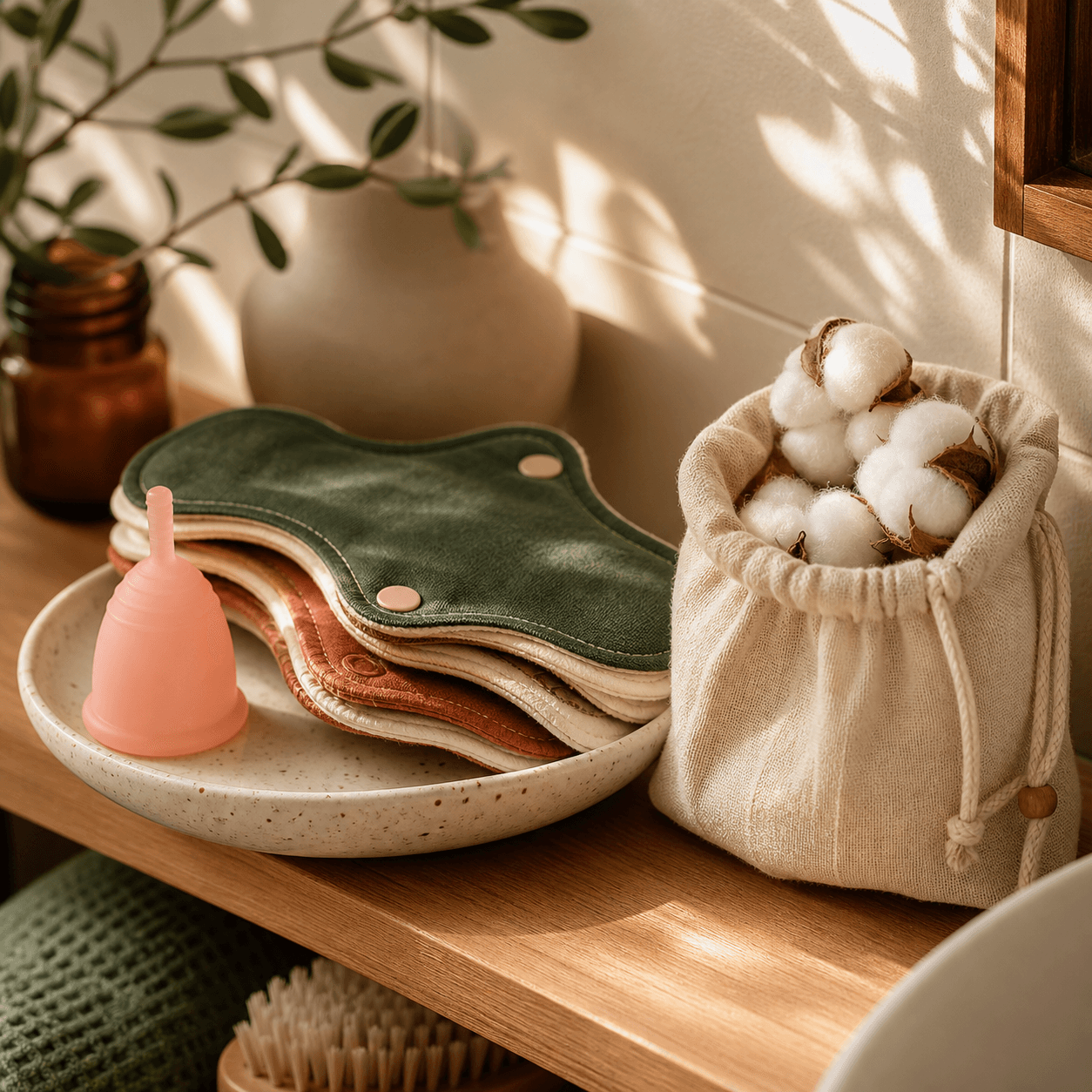
A menstrual cup is a small, flexible cup, usually medical-grade silicone, that you fold and insert to collect rather than absorb flow. It's the flagship zero-waste product for good reason.
- Wear time: Up to 12 hours depending on your flow.
- Lifespan: Up to 10 years with proper care.
- Best for: Almost everyone, once you find the right size and learn the fold.
There's a genuine learning curve of a cycle or two, so give yourself grace while you get the hang of insertion and removal.
Menstrual Discs
Similar to cups but disc-shaped, these sit higher and tuck behind the pubic bone. Many people find they can be worn during intercourse and offer a different comfort profile than cups.
Period Underwear
These look and feel like regular underwear but have built-in absorbent, leak-resistant layers. You wear them, rinse them, wash them, and reuse them.
- Best for: Light-to-medium days, backup with a cup, overnight, and anyone who dislikes insertion.
- Care: Rinse in cold water, then machine wash and air dry.
Cloth Pads
Reusable pads made from soft absorbent fabric that snap around your underwear, replacing disposable pads directly. They're breathable, gentle on sensitive skin, and come in every absorbency level.
What About Cost
Here's where the switch really pays off. A quality menstrual cup typically runs 20 to 40 dollars and lasts up to a decade. Period underwear runs roughly 25 to 45 dollars a pair, and cloth pads a bit less. Compare that to a lifetime of monthly disposable purchases and the math is lopsided.
Buying reusable period products feels expensive in the moment and turns out to be one of the clearest money-savers in low-waste living. A single cup can outlast thousands of dollars' worth of disposables.
Most people recoup the upfront cost within three to six months, and everything after that is savings.
Caring for Reusables
Keeping zero-waste period products clean is simpler than newcomers expect.
- Cups and discs: Rinse and reinsert during your cycle, then boil for a few minutes at the end of each cycle to sanitize. Store in a breathable cotton pouch.
- Period underwear: Rinse in cold water until it runs clear, machine wash cold, and air dry. Skip fabric softener, which coats the absorbent layers.
- Cloth pads: Same routine, cold rinse then wash and line dry.
A few practical notes: always wash your hands before handling a cup, change products within the recommended time window just as you would with disposables, and keep a small wet bag in your purse for storing used cloth pads or underwear when you're out.
Easing Into It
If the whole shift feels like a lot, start where you're most comfortable. Someone nervous about insertion might begin with period underwear or cloth pads. Someone who wants maximum freedom and the longest wear time might jump straight to a cup. There's no wrong entry point, and you can always adjust.
The takeaway is that zero-waste period products have matured into reliable, comfortable, budget-friendly options that happen to keep an enormous amount of plastic out of landfills. Pick one that suits your body, give it a cycle to become second nature, and you'll likely wonder why you didn't switch sooner.
Emily Bennett
Zero-Waste Home Writer
Emily focuses on the low-waste home — refills, natural cleaning, and calm, clutter-free swaps that actually stick. She believes greener living should feel good. More from Emily →