Sustainable Fashion: How to Build a Low-Impact Wardrobe
A practical guide to sustainable fashion: how to build a low-impact wardrobe with fewer, better clothes, smarter fabrics, and habits that make them last.
Somewhere between the thrill of a good deal and the guilt of an overflowing closet, most of us have sensed that the way we buy clothes is a little broken. Sustainable fashion is really just the practice of fixing that, and it turns out to be more freeing than restrictive.
The fashion industry is one of the most resource-hungry on the planet, but a low-impact wardrobe is not about hair-shirt minimalism or buying only expensive "eco" labels. It is about owning fewer, better things and getting the most life out of every one of them.
Why the Way We Shop Matters
The environmental cost of clothing is front-loaded and often invisible. Growing fibers, dyeing fabric, and manufacturing garments consumes enormous amounts of water and energy, and a single cotton shirt can take thousands of liters of water to produce. Synthetic fabrics shed microplastics with every wash, and mountains of barely-worn clothes end up in landfills or shipped overseas.
The engine behind much of this is fast fashion: cheap clothes produced at breakneck speed and priced to be thrown away. The average garment today is worn far fewer times than it was a generation ago before being discarded. That is the pattern a low-impact wardrobe is designed to break.
The First Rule: Wear What You Own
Before buying anything, remember the single most sustainable choice: use what you already have. No new garment, no matter how ethically made, beats the one already hanging in your closet.
- Shop your own closet. Pull everything out and rediscover pieces you forgot you had.
- Repair instead of replacing. Learn to sew a button, patch a knee, or take shoes to a cobbler.
- Rework what no longer fits your life. Hem, dye, or restyle pieces rather than replacing them.
The greenest wardrobe is not full of new sustainable clothes. It is full of clothes you actually wear, over and over, for years.
Build a Capsule Around How You Live
A capsule wardrobe is a compact collection of pieces that mix and match easily, so a smaller number of items yields a larger number of outfits. The goal is versatility, not deprivation.
Start by noticing what you genuinely reach for. Most people wear a small fraction of their closet most of the time. Build around those workhorses.
A simple framework
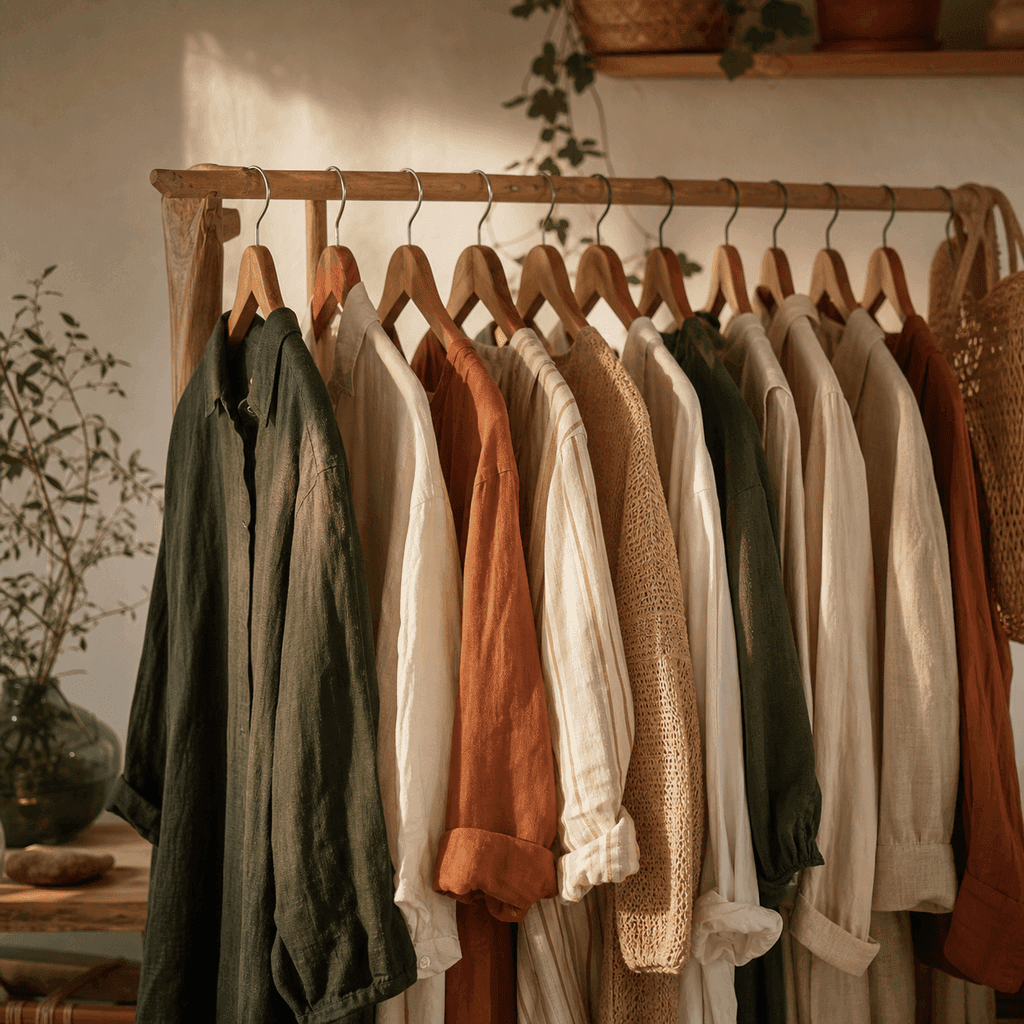
- Choose a core color palette of two or three neutrals plus a couple of accents so everything coordinates.
- Favor versatile silhouettes that dress up or down.
- Fill real gaps rather than chasing trends. If you already own five sweaters, you do not need a sixth.
- Aim for quality over quantity. A well-made piece you wear a hundred times beats five cheap ones you wear twice.
Choose Fabrics and Sources Wisely
When you do buy, the material and origin of a garment shape its footprint.
Fibers to favor include durable natural materials like linen, hemp, organic cotton, wool, and Tencel, which is made from responsibly sourced wood pulp. These tend to last, breathe well, and shed no plastic. Recycled fibers are also a solid choice, since they divert waste and skip raw-material production.
Fibers to limit are cheap virgin synthetics like conventional polyester and nylon, which are petroleum-based and shed microplastics. They are not evil, and recycled versions have their place, especially in activewear, but they should not dominate a thoughtful wardrobe.
Where to buy matters as much as what. In rough order of impact:
- Secondhand and vintage. Thrift stores, consignment shops, and resale apps give clothes a second life with essentially zero new production cost.
- Rented or borrowed. For occasion wear you will rarely use, rental services make sense.
- New from responsible makers. When you buy new, look for brands transparent about their materials, factories, and labor practices, and be wary of vague "eco" claims with nothing to back them.
Make Your Clothes Last
Longevity is where sustainable fashion is won or lost, and most of it comes down to care.
- Wash less and wash cold. Overwashing wears fabric out and wastes energy. Air out and spot-clean between full washes.
- Line dry when you can. The dryer is hard on clothes and energy-hungry.
- Store thoughtfully. Fold knits instead of hanging them, use cedar against moths, and keep everything clean before long storage.
- Repair early. A small hole caught now saves a garment that would otherwise be tossed.
When a piece truly reaches the end, keep it out of the trash. Donate wearable items, pass them to friends, or use textile recycling drop-offs for anything too worn to wear.
Building a low-impact wardrobe is less a shopping project than a shift in mindset: from more to better, from disposable to lasting. Do it well and you end up with a closet full of clothes you love, spend less over time, and lighten your footprint without ever feeling like you are going without.
Emily Bennett
Zero-Waste Home Writer
Emily focuses on the low-waste home — refills, natural cleaning, and calm, clutter-free swaps that actually stick. She believes greener living should feel good. More from Emily →