How to Clean a Bamboo Steamer the Right Way to Make It Last
Learn how to clean a bamboo steamer the right way, from rinsing to drying, so it stays mold-free and lasts for years instead of ending up in the trash.
Honestly, the main reason bamboo steamers end up in the trash has nothing to do with how often you use them. It's how you clean and store them. I've watched beautiful steamers go moldy in just a few months because of one tiny habit, so let me help you learn how to clean a bamboo steamer the right way and avoid that fate entirely.
The good news is that it takes about two minutes and no special products. You just need to know the steps and, above all, one golden rule.
The Golden Rule: Always Dry Completely
I can't say this enough. Your bamboo steamer has to be fully dry before you put it away. Bamboo is porous, so it soaks up water and holds onto it long after the surface looks dry.
Seal that dampness inside a closed cabinet and you've created the perfect little environment for mold and that musty smell. Nearly every ruined steamer I've seen came down to being stored a bit too soon.
Dry bamboo lasts for years. Damp bamboo lasts a season. That one difference is almost entirely in your hands.
Cleaning Step by Step
Do this right after cooking, while any food residue is still soft and easy to lift.
1. Rinse With Hot Water
Run the whole steamer, basket and lid, under hot water as soon as you're done cooking. Hot water loosens grease and stuck-on bits without any soap.
2. Scrub Gently
Use a soft brush or a non-abrasive sponge to work along the slats and remove any clinging food. Go with the grain of the bamboo, not against it, so you don't fray the fibers or scratch the surface.
3. Tackle Stubborn Spots Naturally
For stuck-on residue or a lingering smell, a few gentle tricks work well:
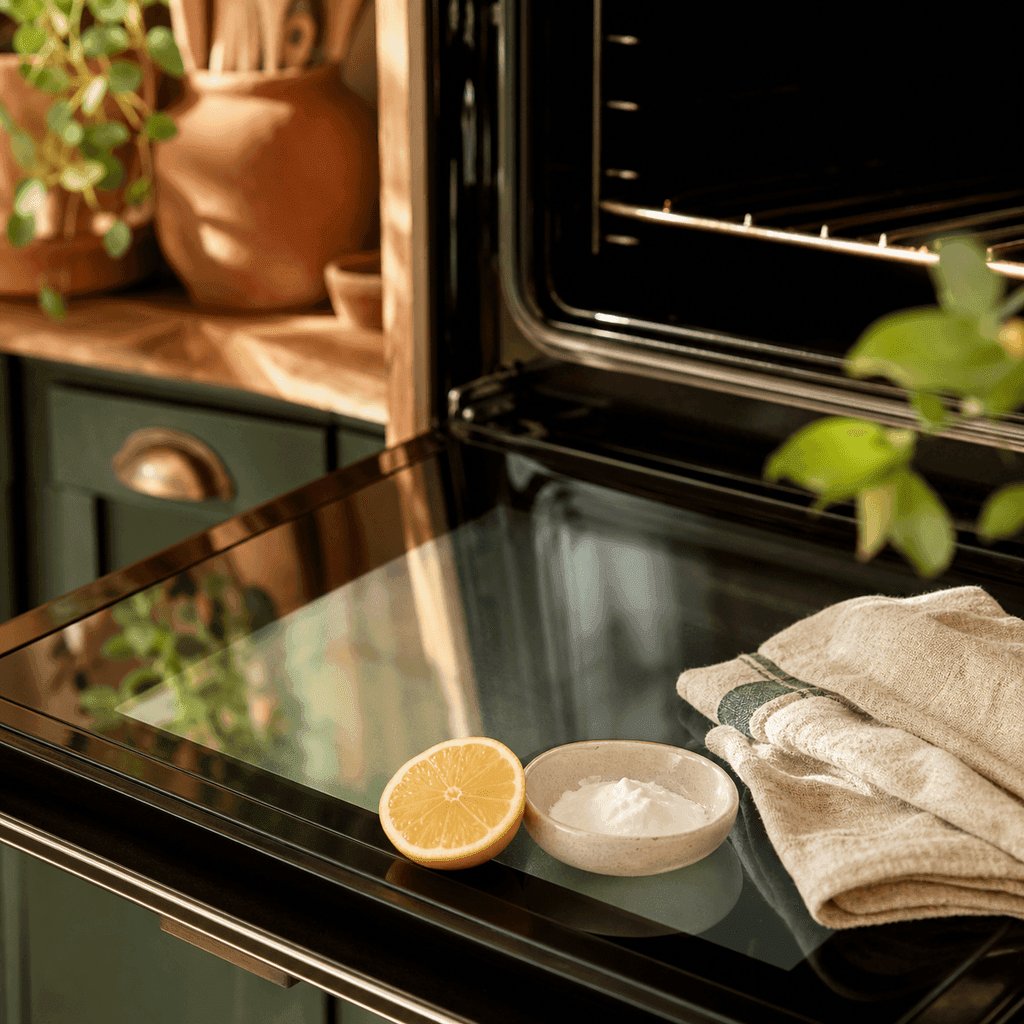
- Sprinkle a little baking soda on the spot and scrub with a damp brush
- Wipe with a cloth dampened in diluted white vinegar to cut odors
- For heavier buildup, steam the empty basket over plain water for a few minutes to loosen it
What to Avoid
A few common habits quietly destroy bamboo steamers, so it's worth naming them.
- No dish soap: bamboo is porous and absorbs detergent, which can taint your next meal and dry out the fibers
- No dishwasher: the prolonged heat and soaking will crack, warp, and split the slats
- No long soaks: leaving the steamer submerged waterlogs the bamboo and speeds up wear
If it smells faintly of soap the next time you cook, you'll understand exactly why plain hot water is the standard here.
Drying and Storing It Right
Once it's clean, shake off the excess water and set the steamer somewhere with good airflow. I stand mine on its side near a window, lid off and separate, until every part is bone dry, usually a few hours.
Never speed things up in the oven or on a stovetop burner, since direct heat warps and cracks bamboo fast. Once fully dry, store it somewhere ventilated rather than sealed in an airtight container or a stuffy cabinet corner.
The Payoff
Treat your bamboo steamer this way and it becomes one of the longest-lasting, lowest-waste tools in your kitchen. Mine has been going strong for years and still looks great, all because of a rinse, a gentle scrub, and the patience to let it dry.
Skip the shortcuts, honor the golden rule, and your steamer will keep earning its place on the shelf for a very long time.
Olivia Reed
Sustainable Kitchen Writer
Olivia writes about low-waste cooking, plastic-free storage, and getting the most out of every ingredient. She tests every swap in her own small-city kitchen. More from Olivia →